


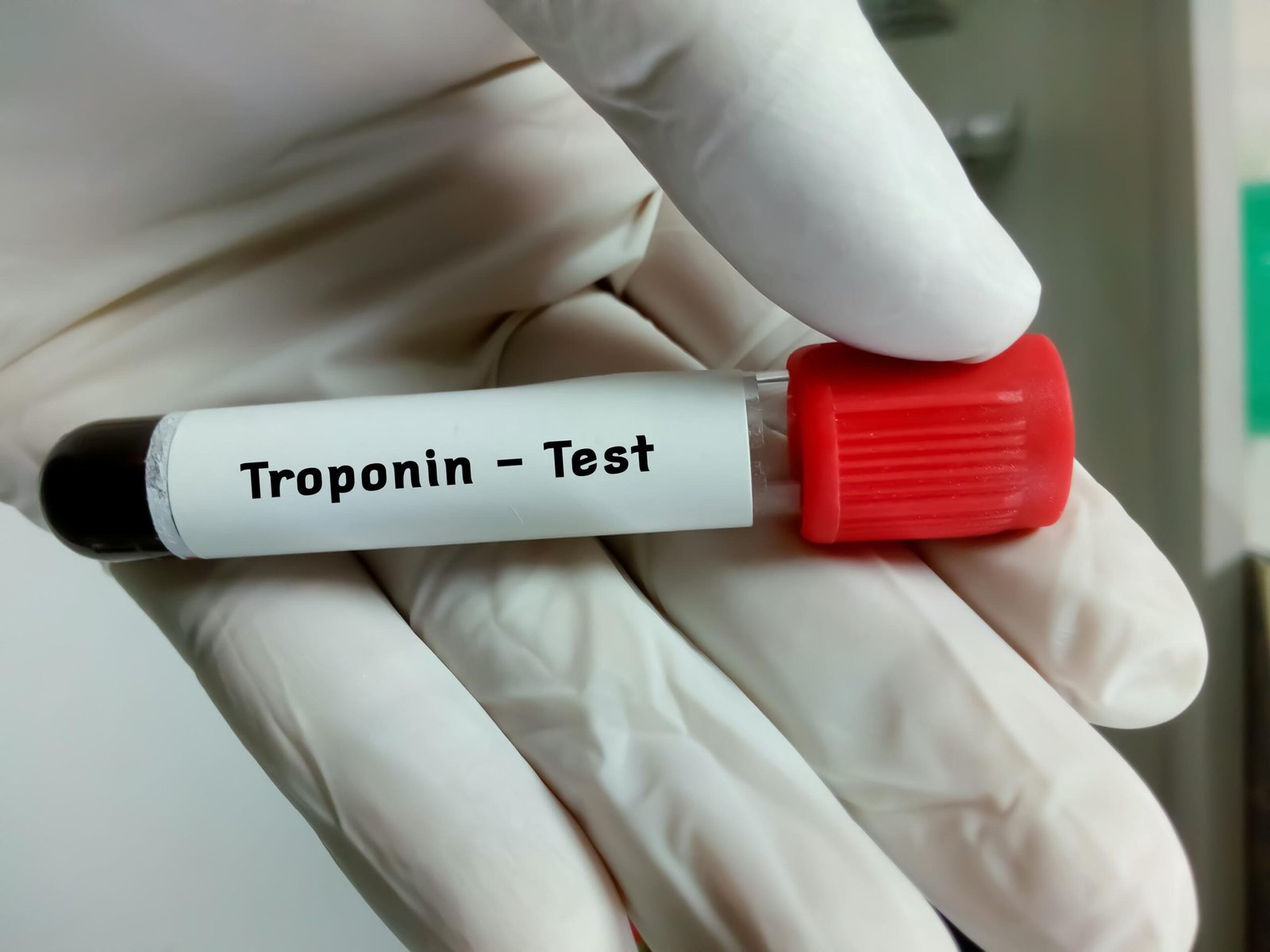
Troponin Test: What It Is, Normal Range & What Results Mean
A troponin test is a simple blood test used to measure the levels of troponin proteins in the blood proteins that are released into the bloodstream when the heart muscle is damaged. It is considered the gold standard for diagnosing heart attacks, assessing cardiac injury, and guiding emergency treatment decisions. Cardiologists and emergency specialists at SRM Global Hospitals in Chennai use the troponin test as the primary diagnostic tool when a patient presents with chest pain, shortness of breath, or any symptoms suggesting acute cardiac injury delivering critical information within hours of symptom onset.
What Is a Troponin Test?
A troponin test measures the levels of troponin proteins specifically cardiac troponin I (cTnI) and cardiac troponin T (cTnT) in the blood. These troponin proteins are found almost exclusively in heart muscle cells and are not normally present in the bloodstream in significant amounts.
When the heart muscle is damaged whether from a heart attack, cardiac injury, or another condition affecting heart muscle cells troponin proteins are released from the damaged cells into the bloodstream. A blood sample drawn from the patient will show elevated troponin levels, indicating that cardiac injury has occurred.
Troponin is a protein that plays a fundamental role in the mechanical contraction of heart muscle cells. It regulates the interaction between actin and myosin the proteins responsible for muscle contraction and exists in three forms: troponin I, troponin T, and troponin C. For cardiac diagnostics, clinical laboratories measure two specific forms of cardiac troponin: troponin I (cTnI) and troponin T (cTnT). These are cardiac-specific and distinct from the troponin found in skeletal muscles elsewhere in the body.
The troponin test is a simple blood test a straightforward blood draw requiring no special preparation that delivers life-saving diagnostic information within 1 to 3 hours of the blood sample being taken. It is the most sensitive and specific cardiac biomarker available for diagnosing heart attacks and is considered the gold standard for assessing heart health in emergency and outpatient settings alike.
Why Is a Troponin Test Done?
The troponin test is critical for diagnosing heart damage, particularly in cases of suspected heart attacks, and is one of the most important diagnostic tests available to the healthcare provider assessing a patient with cardiac symptoms.
Cardiologists and emergency specialists at SRM Global Hospitals use the troponin test as a primary diagnostic tool in a wide range of clinical situations where cardiac injury or cardiovascular diseases are suspected.
Common Reasons for a Troponin Test
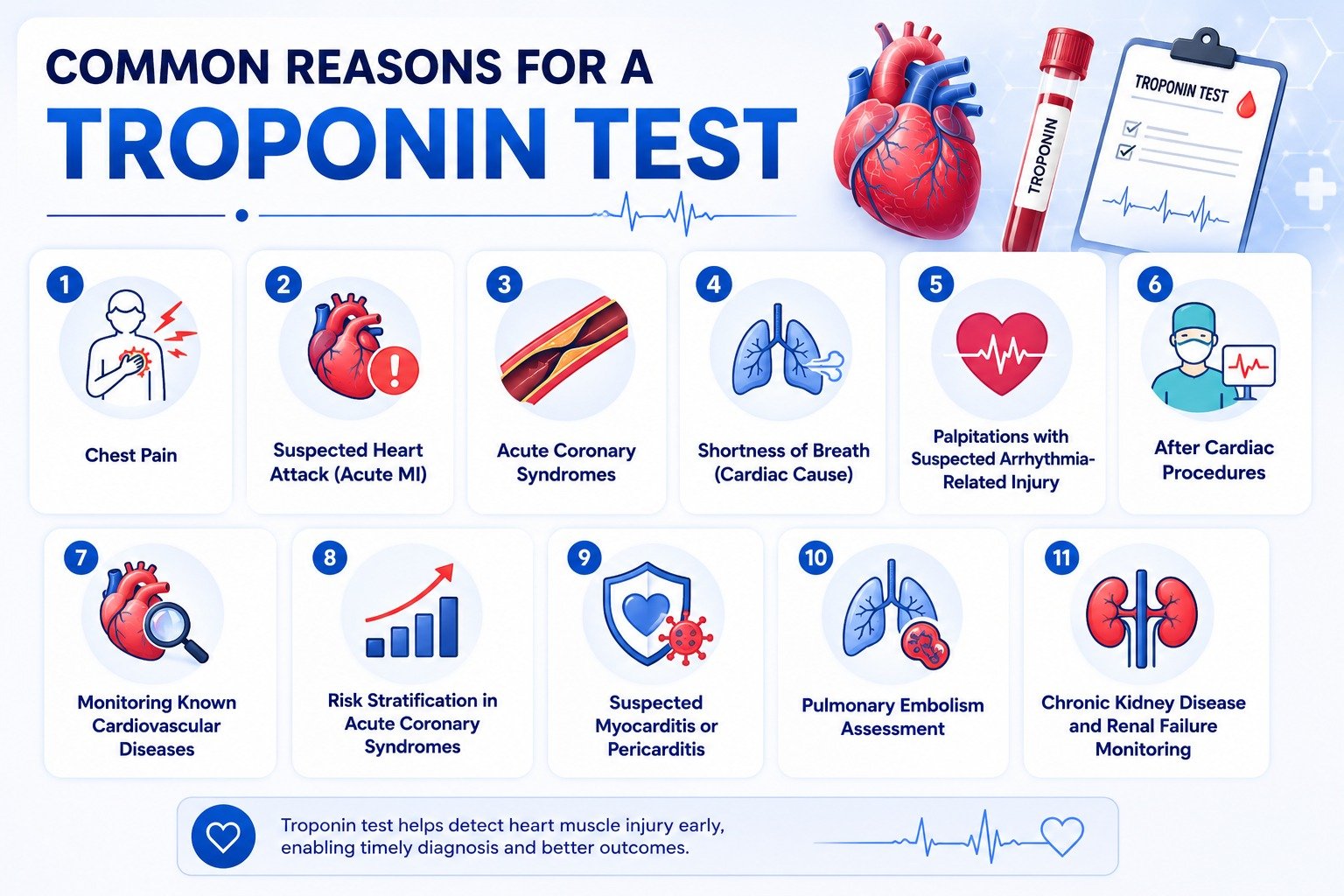
Chest pain — the troponin test is the first-line investigation for any patient presenting with chest pain in the emergency room, to determine whether a heart attack is occurring or has recently occurred
Suspected heart attack (acute myocardial infarction) — diagnosing heart attacks is the primary indication for cardiac troponin tests, with elevated troponin levels confirming heart muscle damage
Acute coronary syndromes — including unstable angina and non-ST-elevation myocardial infarction (NSTEMI), where the troponin test distinguishes between high-risk and lower-risk presentations
Shortness of breath with cardiac cause — to assess whether heart failure, pulmonary embolism, or acute myocardial infarction is the underlying cause
Palpitations with suspected arrhythmia-related cardiac injury — to detect any associated rise in troponin levels indicating heart muscle stress
After cardiac procedures — to monitor troponin levels following cardiac surgery, angioplasty, or ablation procedures and detect any procedure-related cardiac injury
Monitoring known cardiovascular diseases — to detect deterioration in patients with existing heart failure or coronary artery disease
Risk stratification in acute coronary syndromes — troponin test results are used for risk stratification to determine the urgency and intensity of treatment required
Suspected myocarditis or pericarditis — inflammatory conditions affecting the heart muscle can cause elevated troponin levels even without a classic heart attack
Pulmonary embolism assessment — elevated cardiac troponin in pulmonary embolism indicates right ventricular strain and guides treatment intensity
Chronic kidney disease and renal failure monitoring — both chronic kidney disease and renal failure can elevate troponin levels, requiring careful interpretation by the healthcare provider alongside the patient’s medical history
When Should You Seek Immediate Troponin Testing?
Symptom | Clinical Urgency |
|---|---|
Sudden severe chest pain or pressure | Emergency — immediate troponin test in the emergency room |
Chest pain radiating to arm, jaw, or back | Emergency — possible heart attack beginning |
Chest pain with sweating, nausea, or dizziness | Emergency — acute myocardial infarction suspected |
Shortness of breath at rest with chest discomfort | Urgent — troponin test and ECG required immediately |
Palpitations with chest pain or near-fainting | Urgent — rule out acute coronary syndromes |
Types of Troponin Tests
Clinical laboratories measure different forms of cardiac troponin. The healthcare provider selects the appropriate cardiac troponin test based on the clinical scenario and the laboratory’s available assays.
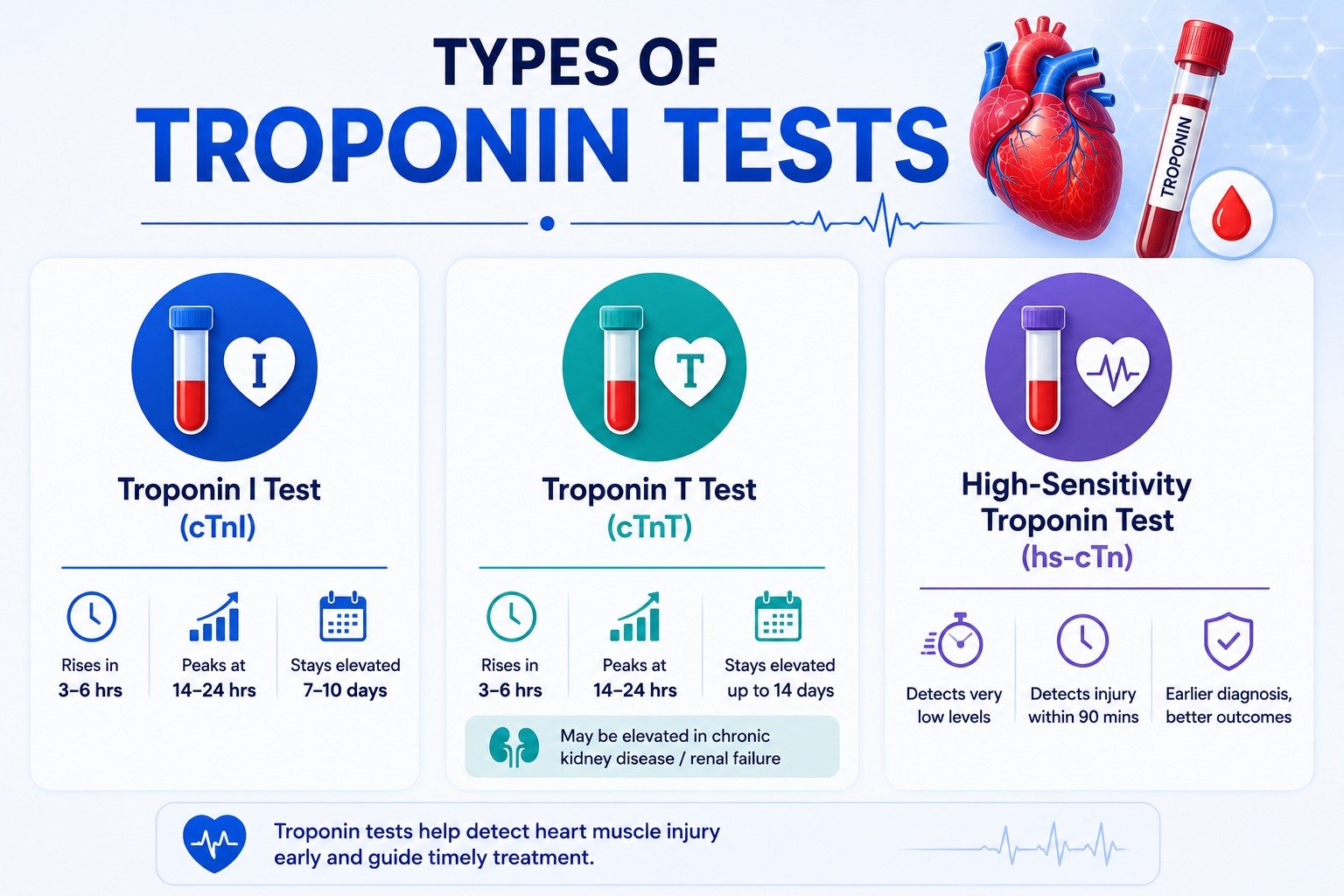
Troponin I Test (cTnI)
The cardiac troponin I test cTnI measures the concentration of troponin I in the blood. Cardiac troponin I is highly specific to the heart muscle and is not found in skeletal muscles, making it one of the most cardiac-specific biomarkers available. Troponin I levels begin to rise within 3 to 6 hours of a heart attack, reach peak levels at 14 to 24 hours, and remain elevated for 7 to 10 days — making the troponin I test valuable for diagnosing both recent and slightly older cardiac injury.
Troponin T Test (cTnT) — Trop T Test
The cardiac troponin T test also called the trop T test measures cardiac troponin T levels in the blood. Like cardiac troponin I, troponin T is released when the heart muscle is damaged. Elevated troponin T levels begin to appear within 3 to 6 hours after a heart attack and remain elevated for up to 14 days slightly longer than troponin I levels. The trop T test is particularly useful for detecting heart attacks that may have occurred several days before the patient presents to the emergency room.
Elevated troponin T levels are also seen in chronic conditions such as chronic kidney disease and renal failure, where low-level troponin elevation may reflect ongoing subclinical cardiac injury rather than an acute heart attack. The healthcare provider interprets elevated troponin T levels in the context of the patient’s full medical history and clinical presentation.
High-Sensitivity Cardiac Troponin Test (hs-cTn)
High-sensitivity cardiac troponin assays high sensitivity tests are the most advanced form of the troponin test. These high sensitivity cardiac troponin assays can detect very low concentrations of troponin in the blood, allowing for earlier diagnosis of myocardial injury often within 90 minutes of symptom onset. This is a significant advancement over conventional troponin assays, which typically require 3 to 6 hours to show a detectable rise in troponin levels.
High-sensitivity cardiac troponin tests are now the recommended standard at leading cardiac centres including SRM Global Hospitals, as they allow cardiologists to rule in or rule out a heart attack much earlier, improving patient outcomes and reducing unnecessary hospital admissions.
Troponin Test Normal Range
The troponin test normal range varies slightly between laboratories and between the specific assay used. Understanding what constitutes normal troponin levels is essential for accurate interpretation of troponin test results.
Normal Troponin Levels — Reference Values
Troponin Type | Normal Troponin Levels | Elevated Troponin Threshold |
|---|---|---|
Cardiac Troponin I (cTnI) | Less than 0.04 ng/mL | Above 0.04 ng/mL suggests cardiac injury |
Cardiac Troponin T (cTnT) — Trop T | Less than 0.01 ng/mL | Above 0.01 ng/mL suggests cardiac injury |
High-Sensitivity Troponin | Below the 99th percentile of a healthy reference population | Above 99th percentile indicates myocardial injury |
Normal troponin levels are generally considered to be less than 0.04 ng/mL, but the exact normal range can vary slightly between laboratories depending on the assay and methodology used. Patients at SRM Global Hospitals should always interpret their troponin test results in consultation with the cardiologist, as the clinical context is essential for accurate evaluation.
What Is a Dangerously High Troponin Level?
Very high troponin levels generally above 0.40 ng/mL can indicate a heart attack, necessitating immediate medical intervention. A single markedly elevated troponin level in a patient presenting with chest pain and ECG changes is sufficient to confirm an acute myocardial infarction and initiate emergency treatment.
The rise and fall pattern of troponin levels in the blood over serial measurements called the troponin delta is particularly important. A significant rise or fall in troponin levels between measurements taken 1 to 3 hours apart confirms acute cardiac injury rather than a chronic elevated baseline from conditions such as chronic kidney disease or renal failure.
Understanding Troponin Test Results
Troponin test results must always be interpreted by the healthcare provider in the full context of the patient’s symptoms, medical history, physical examination, and ECG findings. Doctors evaluate troponin results alongside physical symptoms and an electrocardiogram (ECG) to assess heart conditions and determine the most appropriate management.
Normal Troponin Test Results
Normal troponin levels where the result falls within the troponin test normal range for the laboratory indicate that the heart muscle is not currently releasing significant troponin into the bloodstream. In a patient presenting with chest pain, a normal troponin test result on a high-sensitivity assay taken at arrival and repeated at one to three hours effectively rules out an acute heart attack in the majority of cases.
A normal troponin test result provides important reassurance. However, the healthcare provider will consider the full clinical picture including symptoms, ECG findings, and medical history before discharging a patient or pursuing further tests.
Elevated Troponin Levels — What They Mean
Elevated troponin levels — typically above 0.04 ng/mL — indicate potential heart damage and may suggest conditions such as a heart attack or other cardiac issues. The degree of troponin elevation provides important clinical information:
Mildly elevated troponin levels — may indicate minor cardiac injury from non-ischaemic causes such as myocarditis, pulmonary embolism, cardiac contusion, chronic kidney disease, or demand ischaemia from sepsis or arrhythmias
Moderately elevated troponin levels — warrant urgent further evaluation including serial troponin tests, repeat ECG, and clinical assessment to determine the underlying cause
Very high troponin levels (above 0.40 ng/mL) — strongly suggest acute myocardial infarction and require immediate medical attention and emergency cardiac intervention
How Long Do Troponin Levels Remain Elevated?
After a heart attack, the timeline of troponin elevation in the bloodstream is clinically important:
Troponin Type | When It Rises | When It Peaks | How Long It Remains Elevated |
|---|---|---|---|
Troponin I (cTnI) | 3–6 hours after heart attack begins | 14–24 hours | Remains elevated for 7–10 days |
Troponin T (cTnT) — Trop T | 3–6 hours after heart attack begins | 12–48 hours | Remains elevated for up to 14 days |
High-Sensitivity Troponin | Within 1–3 hours of symptom onset | Earlier than conventional assays | Varies by degree of cardiac injury |
After a heart attack, troponin levels typically return to normal within 4 to 10 days, indicating the resolution of acute heart muscle damage. Troponin levels that remain elevated beyond this timeframe may indicate ongoing cardiac injury or a non-ischaemic cause of elevated troponin levels.
Causes of Elevated Troponin Levels
Elevated troponin levels do not exclusively indicate a heart attack. Troponin elevation can occur due to a wide range of conditions that cause cardiac injury both ischaemic and non-ischaemic. The healthcare provider at SRM Global Hospitals evaluates the underlying cause of elevated troponin levels carefully before making a diagnosis.
Cardiac Causes of Elevated Troponin
Acute myocardial infarction (heart attack) — the most common and serious cause of significantly elevated troponin levels; very high troponin levels above 0.40 ng/mL combined with chest pain strongly indicate a heart attack requiring immediate medical attention
Unstable angina and acute coronary syndromes — elevated troponin levels in this setting indicate myocardial injury requiring urgent risk stratification and management
Myocarditis — inflammation of the heart muscle from viral or autoimmune causes releases troponin proteins from damaged heart muscle cells
Pericarditis — inflammation of the pericardium can cause associated heart muscle inflammation and troponin elevation
Heart failure — elevated troponin levels in heart failure reflect ongoing stress and damage to heart muscle cells, and are associated with poorer prognosis
Cardiac trauma and cardiac contusion — direct physical injury to the chest area causes cardiac injury and elevated troponin levels
Cardiac surgery and ablation procedures — troponin levels rise after any procedure that involves manipulation of heart muscle cells
Non-Cardiac Causes of Elevated Troponin Levels
Troponin elevation can occur due to various conditions beyond direct cardiac ischaemia:
Pulmonary embolism — elevated cardiac troponin in pulmonary embolism indicates right ventricular strain from elevated pulmonary pressures and blood flow obstruction
Chronic kidney disease and renal failure — both chronic kidney disease and renal failure impair clearance of troponin from the bloodstream, resulting in persistently elevated troponin levels even without acute cardiac injury
Sepsis and critical illness — demand ischaemia during sepsis causes elevated troponin levels due to oxygen supply-demand mismatch in heart muscle cells
Stroke — both ischaemic and haemorrhagic strokes have been associated with elevated troponin levels, potentially due to autonomic dysfunction affecting the heart
Pulmonary hypertension — elevated right ventricular pressures in pulmonary hypertension cause chronic strain on the right ventricular heart muscle, resulting in persistently elevated cardiac troponin levels
Severe pulmonary disease — acute exacerbations of severe pulmonary disease can cause demand ischaemia and cardiac troponin release
Cardiac arrhythmias — tachyarrhythmias such as rapid atrial fibrillation cause demand ischaemia and may produce mildly elevated troponin levels
Hypertensive emergencies — extreme blood pressure elevation causes cardiac stress and myocardial injury, reflected by elevated troponin levels in the blood
Certain medications and chemotherapy — direct cardiac toxicity from certain medications and chemotherapy agents causes troponin elevation without coronary artery disease
Troponin Test Procedure: What to Expect
The troponin test is a simple blood test that requires minimal preparation and delivers rapid results. It is performed in the emergency room, as an inpatient investigation, or as an outpatient blood test at the diagnostic laboratory of SRM Global Hospitals.
How Is the Troponin Test Performed?
The troponin test involves a straightforward blood draw from a vein typically the antecubital vein in the arm. A blood sample of a few millilitres is collected into a specialised tube and sent to the clinical laboratory immediately for analysis.
The test procedure takes only a few minutes. Results are typically available within one to two hours of the blood sample reaching the laboratory. For high-sensitivity cardiac troponin assays, results may be available even faster, supporting rapid clinical decision-making in the emergency room setting.
No fasting, no special preparation, and no radiation are involved. The blood draw involves a brief, minor discomfort at the puncture site equivalent to any routine blood test.
Serial Troponin Testing
In the emergency room setting, a single troponin test result is rarely sufficient for clinical decision-making. Serial troponin tests measuring troponin levels in the blood at arrival and again at one to three hours later allow the healthcare provider to assess the rise and fall pattern of cardiac troponin levels that is characteristic of acute myocardial infarction.
A significant rise or fall in troponin levels between serial measurements confirms acute cardiac injury. Stable elevated troponin levels with no significant change may suggest a chronic underlying cause such as chronic kidney disease rather than an acute heart attack.
Troponin Test Results and Treatment
High troponin levels are a symptom indicating potential heart damage, and treatment focuses on identifying and addressing the underlying cause. The management approach depends entirely on the pattern of troponin elevation, the clinical presentation, and the findings of further tests including ECG and cardiac imaging.
Treatment for Heart Attack-Related Elevated Troponin
If high troponin levels are due to a heart attack, treatment may involve emergency procedures to open a blocked artery such as emergency angioplasty (primary PCI) or thrombolysis to restore blood flow to the heart muscle as rapidly as possible. Immediate medical attention is critical, as the extent of heart muscle damage from a heart attack is directly related to the time from symptom onset to restoration of blood flow.
Following emergency treatment, cardiologists at SRM Global Hospitals typically recommend:
Antiplatelet medications and anticoagulants to prevent further blood clot formation
Beta blockers and ACE inhibitors to protect the damaged heart muscle and support recovery
Statins to reduce coronary artery disease progression
Cardiac rehabilitation and lifestyle changes to minimise the risk of further heart attacks
To minimise the risk of further heart attacks, doctors typically recommend lifestyle changes including quitting smoking, losing weight, increasing physical activity, and improving diet alongside medical therapy.
Treatment for Non-Cardiac Causes of Elevated Troponin
When elevated troponin levels are caused by a non-cardiac condition such as pulmonary embolism, myocarditis, or sepsis treatment is directed at the underlying cause. Cardiologists at SRM Global Hospitals coordinate with relevant specialists to ensure the underlying cause of elevated troponin levels is identified and managed appropriately.
Get Accurate Cardiac Biomarker Testing — Book an Appointment
SRM Global Hospitals in Chennai provides comprehensive cardiac troponin testing including high-sensitivity cardiac troponin assays, serial troponin monitoring, and full acute coronary syndrome evaluation supported by experienced cardiologists and a fully equipped cardiac emergency department.
High-sensitivity cardiac troponin test for rapid diagnosis of myocardial injury within 90 minutes of symptom onset
Serial troponin testing protocol for accurate risk stratification of chest pain and acute coronary syndromes in the emergency room
Comprehensive cardiac biomarkers panel — troponin test alongside ECG, echocardiogram, and coronary angiography for complete cardiac evaluation
24/7 emergency cardiac care for patients presenting with chest pain, elevated troponin levels, and suspected heart attack requiring immediate medical attention
Expert cardiologist interpretation of troponin test results in the full context of the patient’s medical history, ECG findings, and clinical symptoms
Integrated management — from troponin test diagnosis through emergency angioplasty, bypass surgery, and cardiac rehabilitation
Outpatient troponin testing for patients referred with elevated troponin levels requiring further evaluation of the underlying cause
Transparent cardiac diagnostic pricing with insurance-friendly billing and health package options for comprehensive cardiac health assessment
FAQs on Troponin Test
1. What Is a Troponin Test and What Does It Measure?
A troponin test is a blood test that measures the levels of troponin proteins specifically cardiac troponin I (cTnI) and cardiac troponin T (cTnT) in the blood. Troponin is a protein found almost exclusively in heart muscle cells. When the heart muscle is damaged, troponin proteins are released into the bloodstream, where they can be detected and measured. The troponin test is the gold standard for diagnosing heart attacks and assessing cardiac injury, and is considered one of the most important diagnostic tests in emergency cardiac care.
2. What Is the Troponin Test Normal Range?
Normal troponin levels are generally considered to be less than 0.04 ng/mL for cardiac troponin I, though the exact troponin test normal range varies slightly between laboratories and assay types. For high-sensitivity cardiac troponin assays, the normal range is defined as below the 99th percentile of a healthy reference population. Elevated troponin levels typically above 0.04 ng/mL indicate potential heart damage. Very high troponin levels above 0.40 ng/mL strongly suggest an acute heart attack requiring immediate medical attention.
3. What Is the Trop T Test?
The trop T test or cardiac troponin T test measures the levels of cardiac troponin T (cTnT) in the blood. It is one of the two main cardiac troponin tests used for diagnosing heart attacks and assessing cardiac injury. Elevated troponin T levels begin to appear within 3 to 6 hours after a heart attack and remain elevated for up to 14 days slightly longer than troponin I levels. The trop T test is particularly useful for detecting heart attacks that occurred several days before the patient presents for evaluation.
4. What Does an Elevated Troponin Level Mean?
Elevated troponin levels above the troponin test normal range indicate that the heart muscle has been damaged and is releasing troponin proteins into the bloodstream. The most serious cause of elevated troponin levels is a heart attack. However, elevated troponin can also occur due to myocarditis, pulmonary embolism, heart failure, chronic kidney disease, renal failure, cardiac trauma, and several other conditions. The healthcare provider at SRM Global Hospitals evaluates the underlying cause by considering the troponin test results alongside the patient’s symptoms, medical history, and ECG findings.
5. How Is a Troponin Test Done?
A troponin test is a simple blood test requiring a straightforward blood draw from a vein in the arm. The blood sample is sent to the clinical laboratory, and results are typically available within one to two hours. No fasting, no special preparation, and no radiation are involved. In the emergency room, serial troponin tests are performed measuring troponin levels at arrival and again at one to three hours later to assess the rise and fall pattern that confirms acute cardiac injury.
6. How Long Do Troponin Levels Stay Elevated After a Heart Attack?
After a heart attack, troponin I levels remain elevated for 7 to 10 days, while troponin T levels remain elevated for up to 14 days. After a heart attack, troponin levels typically return to normal within 4 to 10 days, indicating resolution of acute heart muscle damage. The prolonged elevation of troponin levels in the blood makes the troponin test useful for diagnosing heart attacks that occurred several days before the patient sought medical attention.
7. Can Troponin Levels Be Elevated Without a Heart Attack?
Yes. Troponin elevation can occur due to conditions other than myocardial infarction including myocarditis, pulmonary embolism, heart failure, pericarditis, cardiac surgery, chronic kidney disease, renal failure, severe pulmonary disease, stroke, sepsis, cardiac arrhythmias, and certain medications. The healthcare provider at SRM Global Hospitals carefully evaluates the pattern of troponin elevation including serial test results and the clinical context to determine whether elevated troponin levels represent an acute heart attack or a non-ischaemic underlying cause.
8. What Happens After an Abnormal Troponin Test Result?
An elevated troponin test result requires immediate evaluation by the healthcare provider or cardiologist. If a heart attack is confirmed, emergency procedures to restore blood flow such as angioplasty are initiated immediately. Further tests including serial troponin testing, ECG, echocardiogram, and coronary angiography are performed to assess the extent of cardiac injury and plan treatment. If the elevated troponin levels are due to a non-cardiac underlying cause, treatment is directed at managing that condition. Cardiologists at SRM Global Hospitals follow evidence-based protocols to ensure every patient with an abnormal troponin test result receives rapid, accurate, and effective care.
9. What Is a High-Sensitivity Troponin Test?
A high-sensitivity cardiac troponin test also called a high sensitivity troponin assay is an advanced form of the troponin test that can detect very low concentrations of troponin in the blood, allowing for earlier diagnosis of myocardial injury often within 90 minutes of symptom onset. This is significantly faster than conventional troponin assays, which typically require 3 to 6 hours to show a detectable rise. High-sensitivity cardiac troponin tests are the current recommended standard for chest pain evaluation in leading cardiac centres, including SRM Global Hospitals, enabling faster rule-in and rule-out of heart attacks in the emergency room.
