


Mouth Ulcers: Why They Happen & How to Treat Them Fast
Mouth ulcers also known as canker sores or aphthous ulcers are painful, round or oval sores that develop inside the oral cavity on the mouth’s lining, tongue, gums, or inner cheeks. Most mouth ulcers are completely harmless and resolve on their own within one to two weeks without medical treatment. However, frequent mouth ulcers, extremely painful sores, or ulcers that persist beyond two to three weeks may signal an underlying health condition requiring evaluation by a specialist. Dentists and oral medicine specialists at SRM Global Hospitals in Chennai assess mouth ulcer causes comprehensively — distinguishing benign recurrent aphthous ulcers from those driven by systemic conditions — and provide targeted mouth ulcer treatment to promote healing and prevent recurrence.
What Is a Mouth Ulcer?
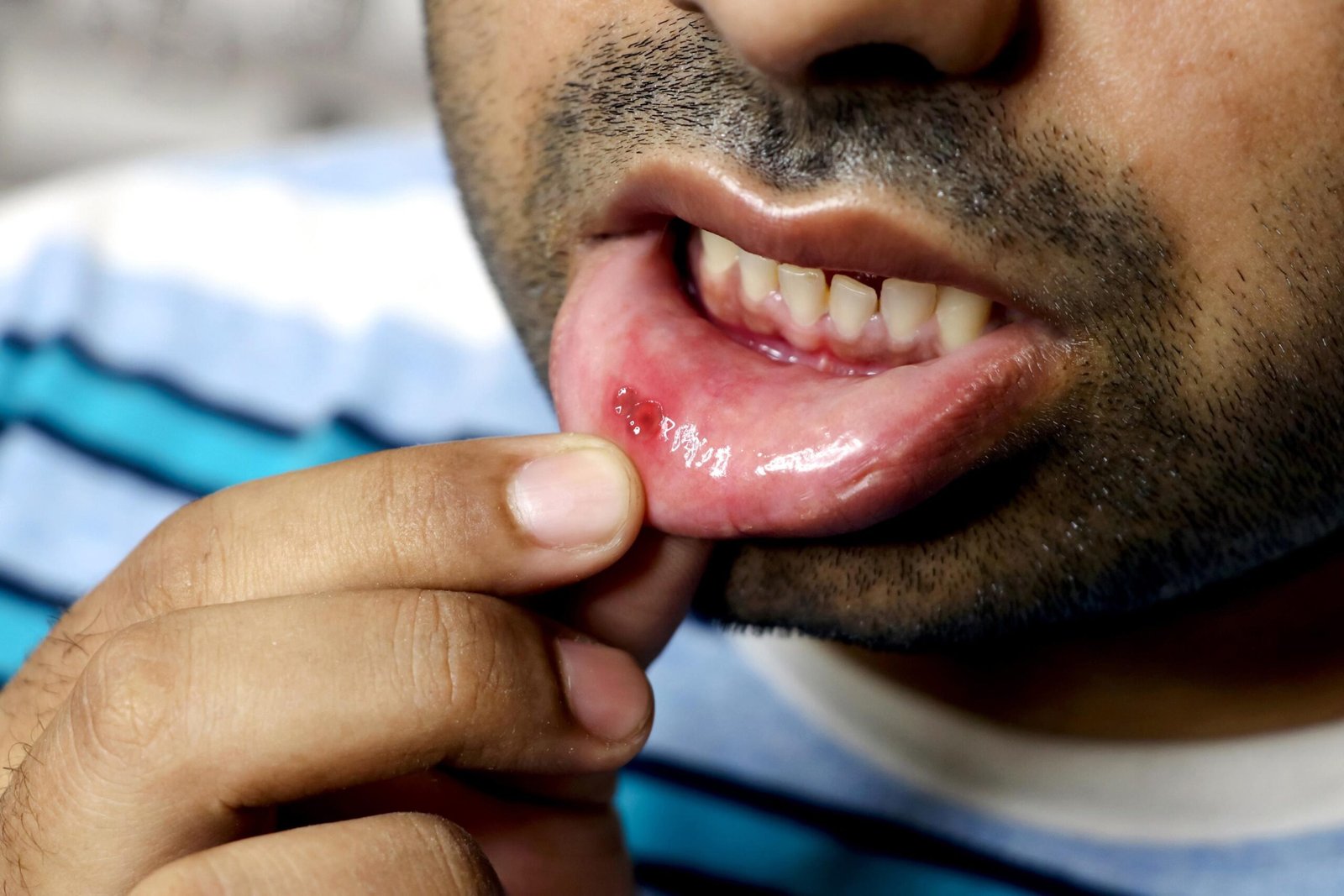
A mouth ulcer is a small, painful break in the mouth’s lining that exposes the sensitive tissue underneath. Mouth ulcers or canker sores typically appear as round or oval sores with a white or yellow centre and a red border. They develop inside the cheeks, on the tongue, on the gums, on the soft palate, or at the base of the gums.
Mouth ulcers differ from cold sores in one important way: unlike cold sores, which appear on the outside of the lips and are caused by the herpes virus, mouth ulcers form inside the mouth and are not caused by a viral infection in most cases. Unlike cold sores, aphthous ulcers are not contagious.
Symptoms of mouth ulcers typically include:
Localised pain and tenderness at the site of the sore
A tingling or burning sensation prior to ulceration often the first warning sign that a mouth ulcer is developing
A visible white, yellow, or grey sore surrounded by a red, inflamed border
Gum inflammation around the ulcer site
Difficulty eating, drinking, or speaking when the ulcer is in a sensitive location
Severe pain when consuming spicy foods, acidic foods, or rough-textured foods
Most mouth ulcers are harmless and heal within one to two weeks. Major ulcers are larger and deeper than minor ulcers, can be more painful, and may take several weeks to heal often leaving scars once healed.
Types of Mouth Ulcers
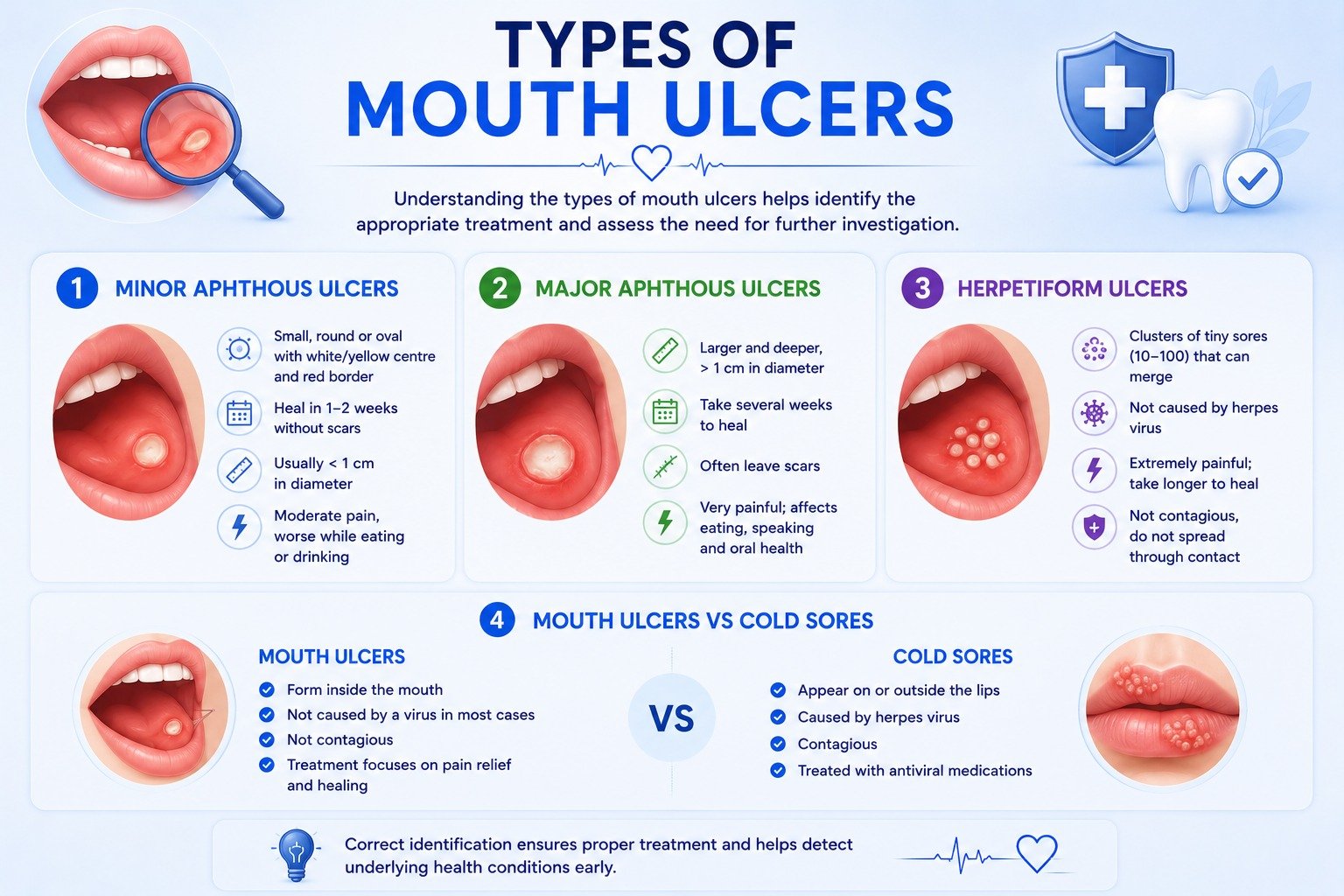
Understanding the types of mouth ulcers helps identify the appropriate mouth ulcer treatment and assess the need for further investigation.
Minor Aphthous Ulcers
Minor ulcers are the most common type of mouth ulcer accounting for the majority of canker sores seen in clinical practice. Minor ulcers are usually small, round, or oval with a white or yellow centre and a red border, healing within one to two weeks without leaving scars. Minor ulcers are typically less than 1 cm in diameter and cause moderate pain that intensifies when eating or drinking.
Major Aphthous Ulcers
Major ulcers are larger and deeper than minor ulcers, measuring more than 1 cm in diameter. Major ulcers can be extremely painful, take several weeks to heal, and often leave scars once healed. They may occur singly or in small numbers and can be severely debilitating significantly affecting eating, speaking, and oral health. Major ulcers warrant medical evaluation to identify any underlying health conditions contributing to their severity and frequency.
Herpetiform Ulcers
Herpetiform ulcers appear as clusters of tiny painful sores that can merge into larger ulcers. Despite their name, herpetiform ulcers are not caused by the herpes virus they are a type of aphthous ulcer that occurs in crops of 10 to 100 tiny sores. Herpetiform ulcers are less common, can be extremely painful, and take longer to heal than minor ulcers. The name refers to their appearance, not their cause — unlike cold sores caused by the herpes virus, herpetiform mouth ulcers are not contagious and do not spread through contact.
Mouth Ulcers vs Cold Sores
Many patients confuse mouth ulcers with cold sores. Unlike cold sores — which are caused by the herpes virus, appear on or outside the lips, and are contagious — mouth ulcers form inside the mouth’s lining, are not caused by a virus in most cases, and are not contagious. Both produce painful sores, but the location, cause, and treatment differ significantly.
What Causes Mouth Ulcers?
Understanding mouth ulcer causes is essential for prevention and for identifying when a mouth ulcer may reflect a more serious underlying health condition. Physical trauma, nutritional deficiencies, and stress are the most common triggers for mouth ulcers in otherwise healthy individuals.
Minor Injuries and Physical Trauma
Mouth ulcers can develop due to minor injuries such as accidentally biting the inside of the cheek, irritation from braces or dentures, or injury from sharp food edges or dental procedures. These traumatic mouth ulcers typically appear at the precise site of the injury and heal within one to two weeks once the source of irritation is removed.
Stress and Sleep Deprivation
Emotional stress and fatigue can weaken the body’s defences, making mouth ulcers more likely to develop. Stress and sleep deprivation can weaken immune response and increase susceptibility to mouth ulcers a relationship well recognised in patients who notice recurring ulcers during periods of intense stress or illness. Managing stress levels and maintaining adequate sleep are important components of preventing frequent mouth ulcers.
Nutritional Deficiencies
Nutritional deficiencies particularly low levels of iron, vitamin B12, or folatecan contribute to the occurrence of mouth ulcers by impairing the health and regenerative capacity of the mouth’s lining. Vitamin deficiencies affecting the oral epithelium predispose to aphthous ulcers, and correcting the underlying deficiency reduces recurrence significantly. Blood tests to assess iron, B12, and folate levels are part of the workup for frequent mouth ulcers at SRM Global Hospitals.
Hormonal Changes
Hormonal changes such as those occurring during menstruation, pregnancy, or menopause can increase the likelihood of developing mouth ulcers. Many women notice a clear relationship between their menstrual cycle and the timing of recurrent aphthous ulcers, suggesting a hormonal trigger that affects the mouth’s lining directly.
Certain Foods
Dietary irritants are a well-recognised trigger for mouth ulcers. Acidic foods including citrus fruits, tomatoes, and vinegar-based foods can directly irritate the mouth’s lining and trigger ulcers in susceptible individuals. Spicy foods cause local irritation and inflammation that promotes ulcer development. Rough-textured foods that scratch the oral mucosa can also trigger ulcers at the site of minor injuries.
Sodium Lauryl Sulphate (SLS) in Oral Care Products
Chemical irritation from sodium lauryl sulphate a foaming agent found in many toothpastes and mouthwashes can trigger mouth ulcers in sensitive individuals. Patients with frequent mouth ulcers are often advised to switch to SLS-free oral care products to reduce recurrence.
Certain Medications
Certain medications are associated with mouth ulcers as a side effect including NSAIDs, beta-blockers, nicorandil, and some chemotherapy agents. If mouth ulcers appear after starting a new medication, it is advisable to seek medical attention to rule out medication-related side effects before stopping any prescribed treatment.
Underlying Health Conditions
Certain medical conditions can lead to more frequent or severe mouth ulcers due to underlying inflammation or nutrient malabsorption:
Coeliac disease — impairs folate and iron absorption through the digestive system, causing nutritional deficiencies that drive recurrent aphthous ulcers
Crohn’s disease and inflammatory bowel disease — cause recurrent mouth ulcers as an extraintestinal manifestation of gut inflammation
Behçet’s disease — a systemic vasculitis that causes extremely painful, recurring major ulcers as a defining feature
Autoimmune disorders — lupus and other autoimmune conditions can cause recurrent oral ulceration through immune-mediated damage to the mouth’s lining
Weakened immune system — immunosuppression from HIV, chemotherapy, or organ transplant medications impairs the body’s ability to heal mouth ulcers and increases susceptibility to fungal infections and viral infections in the oral cavity
Allergic reaction — contact allergy to dental materials, oral care products, or certain foods can trigger recurring mouth ulcers
Bacterial, Viral, and Fungal Infections
While most canker sores are not caused by infection, bacterial infection, viral infections, and fungal infections can cause or complicate mouth ulcers. Herpes simplex virus causes oral ulceration distinct from aphthous ulcers though the appearance can be similar. Fungal infections such as oral candidiasis can cause painful sores alongside the characteristic white patches of oral thrush.
Mouth Ulcer Home Remedies: How to Treat Mouth Ulcers Fast
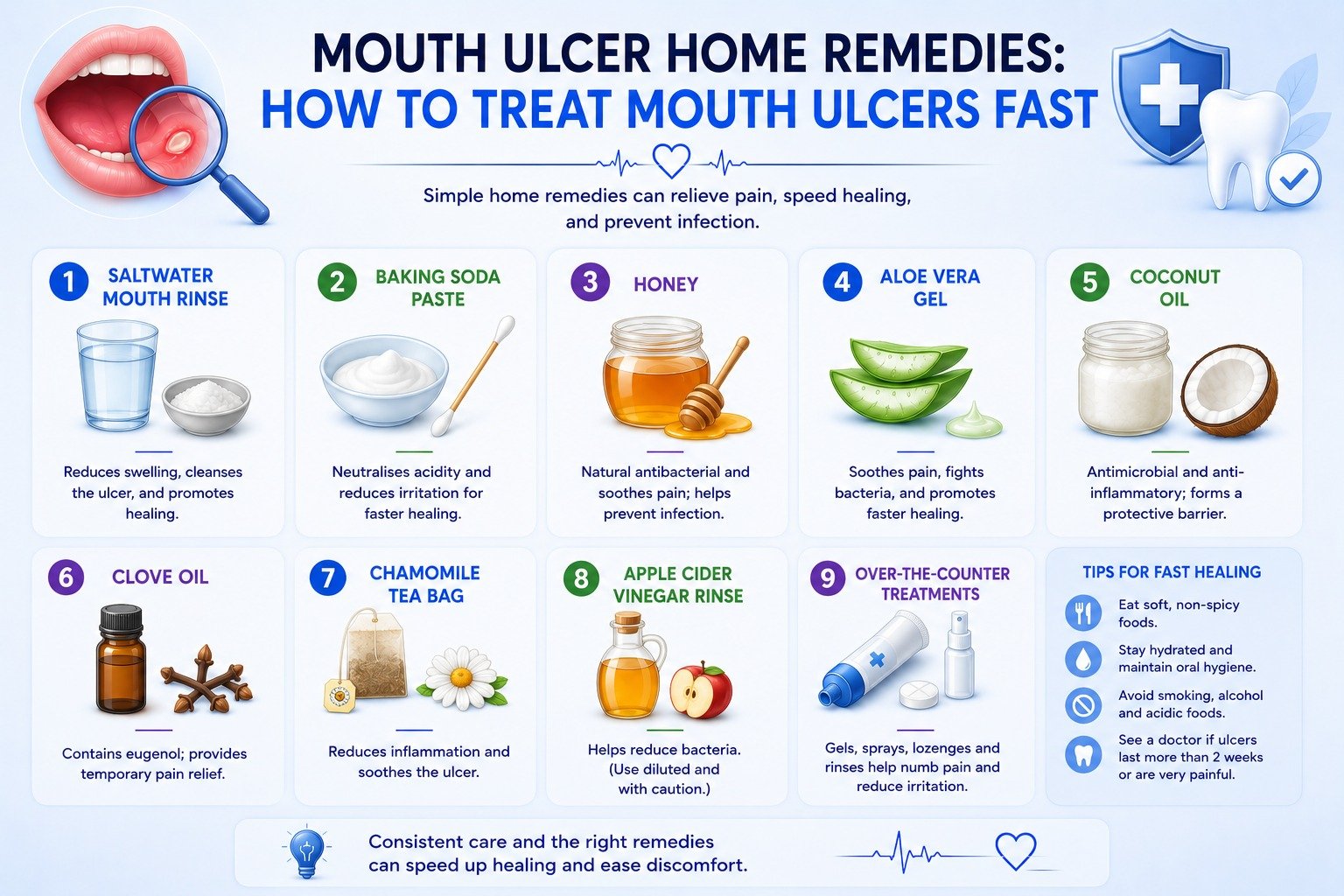
Most mouth ulcers heal on their own within one to two weeks. The primary goals of mouth ulcer treatment are to relieve pain, promote healing, prevent infection, and reduce inflammation during the healing process. Several effective home remedies and natural remedies help achieve these goals.
Saltwater Mouth Rinse
Dissolving a teaspoon of salt in half a cup of warm water and rinsing the mouth for 30 to 60 seconds can help reduce swelling and disinfect the ulcer promoting healing when done two to three times a day. Saltwater mouth rinses are one of the most accessible and evidence-supported home remedies for mouth ulcers. The salt creates a hypertonic environment that draws fluid out of the swollen tissue and helps prevent bacterial infection.
Baking Soda Paste
Mixing a small amount of baking soda with water to form a thick paste and applying it directly to the ulcer can help neutralise acidity and reduce irritation aiding in faster healing. Baking soda raises the local pH around the mouth ulcer, reducing the acidic environment that causes pain and delays healing. Apply the baking soda paste gently using a cotton swab and leave it in place for a few minutes before rinsing your mouth with warm water.
Honey
Applying a small amount of honey directly to the ulcer can provide relief due to its natural antibacterial and anti-inflammatory properties helping to reduce pain and prevent infection. Honey creates a moist, antibacterial environment over the sore that supports the healing process and reduces bacterial infection risk. Use raw or medical-grade honey for the best antibacterial properties.
Aloe Vera Gel
Applying fresh aloe vera gel to the ulcer can reduce pain, fight bacteria, and promote faster healing due to its soothing and anti inflammatory properties. Aloe vera contains compounds with antimicrobial properties and anti inflammatory properties that directly reduce inflammation and discomfort in the mouth’s lining. Apply aloe vera gel directly to the mouth ulcer using a clean cotton swab two to three times daily.
Coconut Oil
Dabbing coconut oil onto the ulcer may help due to its antimicrobial and anti-inflammatory effects forming a protective barrier over the sore and reducing irritation from food and drinks. Coconut oil’s antimicrobial properties help prevent bacterial infection while its anti inflammatory effects reduce inflammation and pain. Coconut oil is safe to apply directly to the mouth’s lining and can be used several times daily during the healing process.
Clove Oil
Clove oil contains eugenol a natural anaesthetic compound with antimicrobial properties that can provide temporary relief from the severe pain of mouth ulcers. Dilute clove oil with a carrier oil such as coconut oil before applying it to the ulcer, as undiluted clove oil can irritate the mouth’s lining and worsen existing ulcers.
Chamomile Tea Bag
A cooled chamomile tea bag applied directly to the ulcer provides anti inflammatory and antimicrobial benefits from chamomile’s active compounds. A chamomile tea bag can be brewed, cooled completely, and then pressed gently against the mouth ulcer for several minutes. Rinsing the mouth with cooled chamomile tea two to three times daily also reduces inflammation and promotes healing.
Apple Cider Vinegar Rinse
Diluted apple cider vinegar mixed in half a cup of warm water can be used as a mouth rinse to reduce bacterial infection around the ulcer. However, apple cider vinegar should be used with caution, as its acidity can temporarily increase pain in sensitive mouth ulcers. Rinse your mouth briefly and avoid direct application to existing ulcers.
Over-the-Counter Treatments
Over-the-counter topical anaesthetics available as gels, sprays, or lozenges can provide temporary relief from mouth ulcer pain. Products containing benzocaine or lidocaine numb the area around the ulcer and allow more comfortable eating and speaking. Antiseptic mouth rinses help prevent bacterial infection and reduce inflammation. Protective adhesive pastes that adhere to the mouth’s lining create a barrier between the ulcer and irritants significantly reducing pain during meals.
How to Prevent Mouth Ulcers
While not all mouth ulcers can be prevented particularly in individuals with underlying health conditions several practical measures significantly reduce the frequency of recurrent aphthous ulcers:
Avoid trigger foods: Reduce intake of acidic foods, spicy foods, and rough-textured foods that irritate the mouth’s lining and trigger ulcers
Switch to SLS-free toothpaste: Eliminating sodium lauryl sulphate from oral care products reduces chemical irritation and prevents recurrence in sensitive individuals
Manage stress levels: Reducing emotional stress and ensuring adequate sleep supports immune function and reduces the frequency of stress-triggered mouth ulcers
Address nutritional deficiencies: Maintaining adequate iron, vitamin B12, and folate through a balanced diet or supplementation prevents recurrent ulcers driven by vitamin deficiencies
Protect the mouth from minor injuries: Use orthodontic wax to cover sharp brackets or wire ends from braces, and ensure dentures are properly fitted to prevent ongoing irritation
Maintain good oral health: Regular dental check-ups, gentle brushing technique, and consistent oral health practices support the integrity of the mouth’s lining and reduce ulcer frequency
Stay hydrated: Dry oral mucosa is more susceptible to ulceration adequate fluid intake supports the health of the mouth’s lining
When to See a Doctor for a Mouth Ulcer
Most mouth ulcers are harmless and heal without medical treatment. However, certain situations require prompt evaluation by a specialist at SRM Global Hospitals:
Warning Sign | Why Medical Attention Is Needed |
|---|---|
Ulcer persists for more than two to three weeks | May indicate oral cancer, systemic disease, or a major aphthous ulcer requiring medical treatment |
Unusually large or extremely painful ulcer | Suggests major aphthous ulcer or underlying health condition |
Recurring ulcers that keep returning despite home care | Warrants investigation for nutritional deficiencies, autoimmune disorders, or gastrointestinal conditions |
Fever or swollen lymph nodes with mouth ulcer | May indicate bacterial infection, viral infections, or systemic illness |
Ulcer appears after starting a new medication | Possible medication-related side effect requiring review |
Painless ulcer that does not heal | Must be assessed to rule out oral cancer or mouth cancer |
Ulcers with other symptoms such as skin rashes, genital ulcers, or eye inflammation | May indicate Behçet’s disease or other autoimmune disorders |
Mouth Ulcers and Oral Cancer
While most mouth ulcers are harmless, a non-healing ulcer particularly one that is painless, has irregular edges, or is associated with a lump or white or red patch in the mouth must be evaluated promptly to rule out oral cancer or mouth cancer. The key distinction is healing time: aphthous ulcers heal within one to two weeks, while ulcers that persist beyond three weeks without improvement require biopsy and specialist assessment at SRM Global Hospitals.
Get Expert Care for Mouth Ulcers — Book an Appointment
SRM Global Hospitals in Chennai provides comprehensive mouth ulcer evaluation and treatment from identifying and managing underlying health conditions to specialist oral medicine assessment for severe, recurring, or non-healing mouth ulcers.
Oral medicine specialist assessment for frequent mouth ulcers, extremely painful sores, or ulcers with other symptoms suggesting systemic disease
Blood tests for iron, vitamin B12, folate, and immune function to identify nutritional deficiencies and underlying health conditions driving recurrent aphthous ulcers
Investigation for underlying health conditions including coeliac disease, Crohn’s disease, and autoimmune disorders in patients with recurring ulcers
Oral cancer screening for non-healing mouth ulcers biopsy and histopathological assessment to rule out oral cancer or mouth cancer
Personalised mouth ulcer treatment plans combining home remedies, anti inflammatory medications, topical treatments, and management of trigger factors
Dental assessment for ulcers caused by minor injuries from braces, dentures, or sharp teeth with prompt correction of the physical cause
Medication review for patients who develop mouth ulcers after starting certain medications
FAQs on Mouth Ulcers
1. What Causes Mouth Ulcers?
Mouth ulcer causes include minor injuries from biting the cheek or irritation from braces, stress and sleep deprivation weakening immune response, nutritional deficiencies in iron, vitamin B12, or folate, hormonal changes during menstruation or pregnancy, acidic foods and spicy foods irritating the mouth’s lining, sodium lauryl sulphate in toothpaste, certain medications, and underlying health conditions including coeliac disease, Crohn’s disease, and autoimmune disorders. Most mouth ulcers in otherwise healthy individuals are triggered by a combination of stress, dietary factors, and minor trauma rather than a serious underlying cause.
2. How Long Do Mouth Ulcers Last?
Most mouth ulcers heal within one to two weeks without specific medical treatment. Minor aphthous ulcers the most common type of canker sores typically resolve within 7 to 14 days. Major ulcers take several weeks to heal and may leave scars. If your mouth ulcer persists for more than two to three weeks, is extremely painful, or keeps returning despite home care, consult a healthcare professional at SRM Global Hospitals to rule out an underlying health condition or oral cancer.
3. What Is the Best Home Remedy for Mouth Ulcers?
Several home remedies effectively relieve pain and promote healing in mouth ulcers. Saltwater mouth rinses dissolving salt in warm water and rinsing two to three times daily reduce swelling and prevent bacterial infection. Applying baking soda paste, aloe vera gel, honey, or coconut oil directly to the ulcer provides anti inflammatory, antimicrobial, and pain-relieving benefits. Cooled chamomile tea bag application reduces inflammation. Over-the-counter topical anaesthetics provide temporary relief from severe pain during the healing process.
4. Are Mouth Ulcers Contagious?
No. Aphthous mouth ulcers canker sores are not contagious and cannot be passed from person to person through contact. This is an important distinction from cold sores, which are caused by the herpes virus and are contagious through direct contact. Unlike cold sores, aphthous ulcers develop inside the mouth’s lining and have no infectious cause in most cases.
5. When Should I See a Doctor for a Mouth Ulcer?
Consult a doctor if a mouth ulcer persists for more than two to three weeks, is unusually large or extremely painful, keeps recurring despite home care, is accompanied by fever or swollen lymph nodes, appears after starting a new medication, or is a painless ulcer that does not heal as a non-healing painless ulcer can be a warning sign of oral cancer. Dental or specialist evaluation at SRM Global Hospitals is also recommended for mouth ulcers associated with other symptoms such as skin rashes, eye inflammation, or genital ulcers, which may indicate autoimmune disorders requiring systemic medical treatment.
6. How Can I Prevent Mouth Ulcers from Coming Back?
To prevent frequent mouth ulcers, avoid acidic foods and spicy foods that trigger ulcers, switch to SLS-free toothpaste to eliminate sodium lauryl sulphate irritation, manage stress levels and ensure adequate sleep, address nutritional deficiencies in iron, B12, and folate, protect the mouth from minor injuries from dental appliances, and maintain good oral health with regular dental check-ups. Identifying and avoiding personal trigger factors using a mouth ulcer diary to track patterns is one of the most effective ways to reduce recurrence.
