


Lipid Profile Test: What It Measures & How to Interpret Results
A lipid profile test is a blood test that measures different types of fats in the blood including total cholesterol, LDL cholesterol, HDL cholesterol, triglycerides, and VLDL cholesterol which are essential indicators of cardiovascular health. The lipid profile test is crucial for evaluating the risk of heart disease, stroke, and other cardiovascular conditions by providing a detailed snapshot of cholesterol and triglyceride levels in the bloodstream. Cardiologists and preventive health specialists at SRM Global Hospitals in Chennai use the lipid profile test as a primary tool for early detection of cardiovascular risk, guiding lifestyle changes and medical treatment before serious cardiovascular disease develops.
High cholesterol is often a silent condition with no visible symptoms making the lipid profile test essential for detection and a cornerstone of cardiovascular health monitoring in adults of all ages.
What Is a Lipid Profile Test?
A lipid profile test also called a lipid panel test, cholesterol test, or coronary risk panel is a blood test that measures the concentration of fat molecules and lipid levels circulating in the blood. The lipid profile blood test provides a complete breakdown of the different types of cholesterol and triglycerides, giving the healthcare provider a clear picture of the patient’s cardiovascular risk and lipid metabolism status.
Cholesterol and triglycerides are types of fat molecules that travel through the blood attached to proteins forming compounds called lipoproteins. The lipid profile test measures each major lipoprotein category separately, allowing cardiologists at SRM Global Hospitals to identify which specific lipid abnormality is driving the patient’s cardiovascular risk.
The lipid profile test is considered one of the most cost-effective preventive screenings available. It is a simple blood sample test requiring only a few minutes to collect and delivers lipid profile test results with critical cardiovascular health information that supports early detection and prevention of heart disease.
The lipid profile test is also referred to as:
Lipid panel test
Cholesterol test
Lipid panel
Lipid profile blood test
Coronary risk panel
Cholesterol and triglyceride levels test
Cardiovascular risk panel
What Does a Lipid Profile Test Measure?
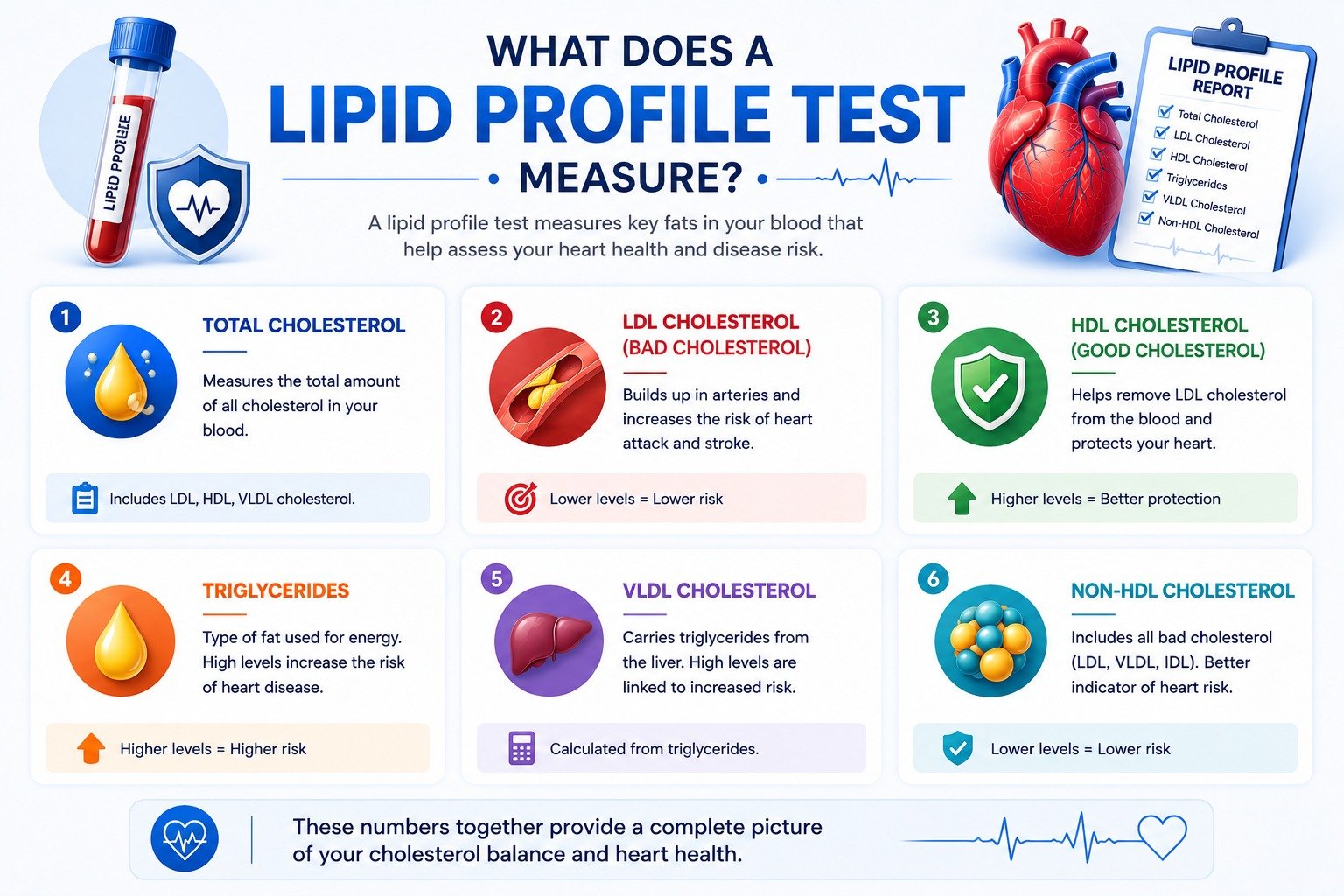
A lipid profile test measures various types of fats in the blood. The lipid profile test details include five key measurements each providing different and complementary information about cardiovascular health and the risk of developing cardiovascular disease.
Total Cholesterol
Total cholesterol is the overall measurement of all cholesterol in the blood including LDL cholesterol, HDL cholesterol, and VLDL cholesterol. While the total cholesterol value provides a broad overview of lipid levels, it is the breakdown into individual components that provides a clearer and more accurate picture of heart health and cardiovascular risk. The lipid profile test report always includes both the total cholesterol value and the individual component breakdown
LDL Cholesterol Bad Cholesterol
LDL cholesterol or low density lipoprotein cholesterol is often referred to as bad cholesterol because it contributes to plaque buildup in the arteries. High LDL cholesterol levels increase the risk of plaque buildup in the arteries, contributing to atherosclerosis and raising the risk of heart attacks and strokes. Elevated LDL cholesterol is the primary driver of coronary artery disease and is the main target of cholesterol-lowering treatment.
The lipid profile test measures LDL cholesterol directly or calculates it using the Friedewald equation based on total cholesterol, HDL cholesterol, and triglyceride levels. Accurate test results for LDL cholesterol require the patient to fast before the blood sample is taken.
HDL Cholesterol Good Cholesterol
HDL cholesterol or high density lipoprotein cholesterol is known as good cholesterol because it helps remove excess LDL cholesterol from the bloodstream and transports it to the liver for breakdown and elimination. Higher levels of HDL cholesterol are protective as they help remove LDL cholesterol from the bloodstream, lowering the risk of heart disease and cardiovascular disease. The lipid profile test measures HDL cholesterol as an important protective factor in the overall cardiovascular risk assessment.
Low HDL cholesterol levels increase cardiovascular risk even when total cholesterol is within the normal range making the HDL component of the lipid profile test critically important for accurate risk stratification.
Triglycerides
Triglycerides are a type of fat in the blood that the body uses for energy. When triglyceride levels are elevated, the excess triglycerides are stored as body fat. Elevated triglycerides increase the risk of heart disease, particularly when combined with high LDL cholesterol or low HDL cholesterol levels. Raised triglyceride levels are associated with metabolic syndrome, obesity, diabetes, excessive alcohol consumption, and a diet high in refined carbohydrates.
Accurate triglyceride measurement is highly dependent on fasting food intake significantly raises triglyceride levels in the blood for several hours, which is why fasting before the lipid profile test is essential for accurate test results.
VLDL Cholesterol
Very low density lipoprotein (VLDL) cholesterol primarily carries triglycerides through the blood. Elevated VLDL cholesterol reflects high triglyceride production by the liver and is associated with metabolic syndrome and increased cardiovascular risk. In the lipid profile test report, VLDL cholesterol is typically calculated based on triglyceride levels using the formula: VLDL = Triglycerides ÷ 5 (in mg/dL).
Non-HDL Cholesterol
Non-HDL cholesterol is calculated as total cholesterol minus HDL cholesterol and represents all the cholesterol carried by potentially atherogenic (plaque-forming) lipoproteins including LDL, VLDL, and IDL. The lipid profile test details include non-HDL cholesterol as an increasingly important cardiovascular risk marker, as it captures the full burden of bad cholesterol beyond LDL alone.
Lipid Profile Test Normal Range
The lipid profile test normal range provides reference values against which each patient’s cholesterol and triglyceride levels are compared. A typical lipid profile test normal range in adults is outlined below. The healthcare provider at SRM Global Hospitals interprets these values in the context of each patient’s individual risk factors, medical history, and cardiovascular risk profile.
Lipid Profile Test Normal Values
Lipid Component | Normal Range | Borderline Range | High Risk Range |
|---|---|---|---|
Total Cholesterol | Below 200 mg/dL | 200–239 mg/dL | 240 mg/dL and above |
LDL Cholesterol (Bad Cholesterol) | Below 100 mg/dL | 100–129 mg/dL | 160 mg/dL and above |
HDL Cholesterol (Good Cholesterol) | 60 mg/dL or higher (protective) | 40–59 mg/dL | Below 40 mg/dL (high risk) |
Triglycerides | Below 150 mg/dL | 150–199 mg/dL | 200 mg/dL and above |
VLDL Cholesterol | 2–30 mg/dL | 30–40 mg/dL | Above 40 mg/dL |
Non-HDL Cholesterol | Below 130 mg/dL | 130–159 mg/dL | 160 mg/dL and above |
Understanding the Normal Range in Context
The lipid profile test normal range values above apply to healthy adults with no additional cardiovascular risk factors. For patients with existing coronary artery disease, diabetes, or a history of heart attack, cardiologists at SRM Global Hospitals set more aggressive LDL cholesterol targets typically below 70 mg/dL to reduce the risk of further cardiovascular events.
Routine lipid screening is recommended to categorize cholesterol levels into normal, borderline, or high-risk categories enabling early detection and intervention before cardiovascular disease develops.
Why Is a Lipid Profile Test Done?
The lipid profile test helps identify abnormal cholesterol and triglyceride levels that silently increase the risk of developing cardiovascular disease, coronary artery disease, heart attack, and stroke often before any symptoms appear. The lipid profile test is one of the most important diagnostic tools the healthcare provider uses to assess and manage long-term cardiovascular risk.
Common Reasons for a Lipid Profile Test
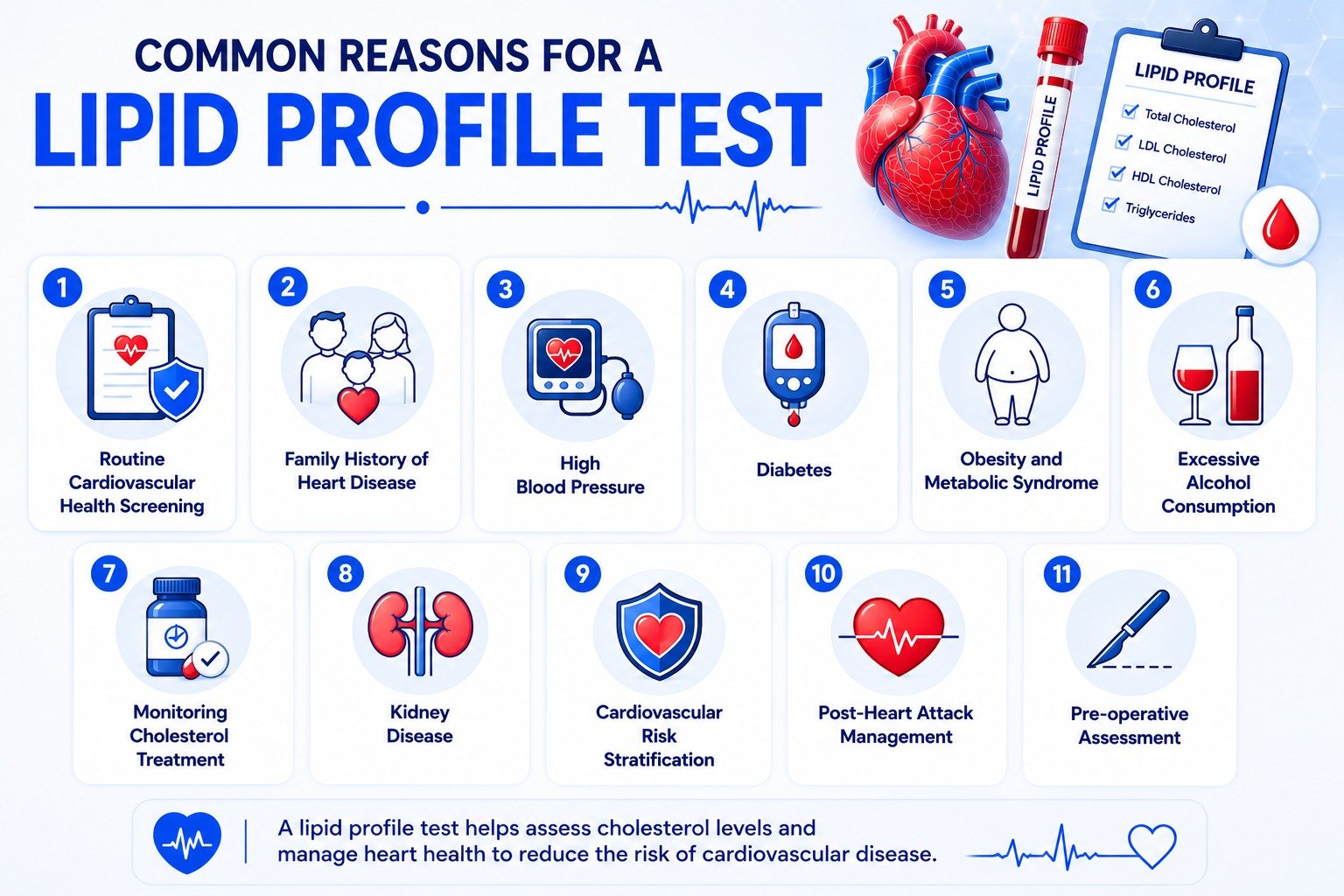
Routine cardiovascular health screening — regular lipid profile testing is recommended for adults, especially those over 30 or with a family history of heart disease, to monitor cardiovascular health and take preventive measures
Family history of heart disease or early cardiovascular disease — patients with a family history of premature heart attack or high cholesterol should prioritise regular lipid profiling for early detection
High blood pressure — hypertension combined with abnormal lipid levels significantly increases cardiovascular risk, making the lipid profile test essential for complete risk assessment
Diabetes — diabetes is a major risk factor for dyslipidaemia; the lipid profile test details the specific pattern of lipid abnormality common in diabetic patients (high triglycerides, low HDL, small dense LDL)
Obesity and metabolic syndrome — elevated triglycerides, low HDL cholesterol, and raised non-HDL cholesterol are characteristic lipid abnormalities in obesity and metabolic syndrome
Excessive alcohol consumption — alcohol raises triglyceride levels significantly and frequent testing is recommended for individuals with high alcohol intake
Monitoring cholesterol treatment — patients on statins or other lipid-lowering therapies require regular lipid profile tests to assess treatment effectiveness and ensure LDL cholesterol targets are met
Kidney disease — both chronic kidney disease and nephrotic syndrome cause significant lipid abnormalities; the lipid profile blood test helps assess cardiovascular risk in these patients
Cardiovascular risk stratification — before starting preventive medications or making significant lifestyle changes, the lipid profile test provides baseline lipid levels for risk stratification
Post-heart attack management — following a heart attack or cardiovascular event, frequent testing of the lipid profile ensures LDL cholesterol targets are achieved and maintained
Pre-operative assessment — the lipid profile test may be included in pre-operative blood tests to assess overall cardiovascular health before major surgery
Who Should Get a Lipid Profile Test?
Individuals with the following risk factors are at higher risk of lipid abnormalities and should prioritise regular lipid profile testing:
Risk Factor | Why the Lipid Profile Test Is Needed |
|---|---|
Family history of heart disease or high cholesterol | To detect inherited dyslipidaemia early before cardiovascular disease develops |
Age above 30–35 years | Cholesterol levels tend to rise with age; early detection enables timely lifestyle changes |
Diabetes or insulin resistance | Diabetic dyslipidaemia increases cardiovascular risk significantly |
High blood pressure | Combined with abnormal lipid levels, hypertension dramatically increases cardiovascular risk |
Obesity or metabolic syndrome | Associated with elevated triglycerides, low HDL, and increased cardiovascular risk |
Excessive alcohol consumption | Alcohol significantly raises triglyceride levels |
Sedentary lifestyle | Physical inactivity raises LDL cholesterol and lowers protective HDL cholesterol |
Smoking | Smoking lowers HDL cholesterol and promotes plaque buildup in arteries |
How Is a Lipid Profile Test Performed?
The lipid profile test procedure is straightforward and quick, requiring only a few minutes for the blood sample collection. The lipid profile test is performed at the diagnostic laboratory of SRM Global Hospitals as an outpatient procedure.
Before the Lipid Profile Test Preparation
Fasting requirement: Fasting for 9 to 12 hours before a lipid profile test is typically required to ensure accurate test results particularly for triglyceride and LDL cholesterol measurements, as recent food intake significantly affects triglyceride levels in the blood. During the fasting period, individuals should only consume water to avoid skewing the lipid profile test results.
Avoid caffeinated beverages: Avoid tea, coffee, and caffeinated drinks during the fasting period, as these can affect accurate test results.
Avoid excessive alcohol consumption: Refrain from drinking alcohol for at least 24 to 48 hours before the lipid profile test, as alcohol significantly raises triglyceride levels and affects lipid profile test results.
Medication disclosure: It is important to inform the healthcare provider about any medications being taken before the lipid profile test, as certain drugs including steroids, oral contraceptives, beta-blockers, and diuretics can affect lipid levels and test results.
Normal daily routine: Maintain a typical balanced diet in the days before the test do not make sudden dietary modifications or start an unusually restrictive diet immediately before the lipid profile blood test, as this may produce unrepresentative results.
During the Lipid Profile Test Procedure
The patient is seated comfortably and a tourniquet is applied to the upper arm to make the vein prominent.
The healthcare provider or phlebotomist cleans the blood draw site with an antiseptic.
A needle is inserted into a vein typically the antecubital vein in the arm and a blood sample of a few millilitres is collected into a specialised tube.
The blood draw takes only a few minutes and involves only brief, minor discomfort at the puncture site.
The blood sample is sent to the clinical laboratory for analysis of total cholesterol, LDL cholesterol, HDL cholesterol, triglycerides, VLDL cholesterol, and non-HDL cholesterol.
Lipid profile test results are typically available within a few hours to one business day, depending on the laboratory.
The entire lipid profile test procedure from blood draw to leaving the clinic takes only a few minutes. No sedation, no radiation, and no significant preparation beyond fasting are required.
How to Interpret Lipid Profile Test Results
Understanding lipid profile test results helps patients engage actively with their healthcare provider and make informed decisions about lifestyle changes and treatment. The lipid profile test report provides each measurement alongside the normal range for reference.
Interpreting Total Cholesterol
A total cholesterol level below 200 mg/dL is considered desirable for healthy adults. A reading between 200 and 239 mg/dL is borderline high, while a level of 240 mg/dL or above represents high total cholesterol and significantly elevated cardiovascular risk. However, total cholesterol alone is insufficient for accurate cardiovascular risk assessment the full lipid profile test details including LDL, HDL, and triglyceride levels are essential.
Interpreting LDL Cholesterol (Bad Cholesterol)
LDL cholesterol below 100 mg/dL is optimal for most patients. Levels between 100 and 129 mg/dL are near optimal. LDL cholesterol between 130 and 159 mg/dL is borderline high, and levels above 160 mg/dL represent high risk. For patients with existing coronary artery disease, diabetes, or a history of heart attack, the healthcare provider at SRM Global Hospitals targets LDL cholesterol below 70 mg/dL to significantly reduce the risk of further cardiovascular events.
High LDL cholesterol levels contribute directly to the accumulation of excess cholesterol in artery walls, forming plaque that narrows the arteries and reduces blood flow the process underlying coronary artery disease and heart attack.
Interpreting HDL Cholesterol (Good Cholesterol)
HDL cholesterol of 60 mg/dL or higher is considered protective against cardiovascular disease. Levels between 40 and 59 mg/dL are acceptable but not optimal. HDL cholesterol below 40 mg/dL represents a significant cardiovascular risk factor even when other lipid levels are within the normal range. High HDL cholesterol helps remove excess cholesterol from the bloodstream, reducing the risk of plaque buildup and protecting against heart disease.
Interpreting Triglyceride Levels
Triglycerides below 150 mg/dL are within the normal range. Triglyceride levels between 150 and 199 mg/dL are borderline high, and levels above 200 mg/dL are high. Elevated triglycerides significantly increase the risk of heart disease particularly when combined with high LDL cholesterol or low HDL cholesterol. Very high triglyceride levels above 500 mg/dL carry a risk of acute pancreatitis in addition to cardiovascular risk.
Interpreting VLDL and Non-HDL Cholesterol
VLDL cholesterol within 2 to 30 mg/dL is considered normal. Elevated VLDL cholesterol reflects high triglyceride levels and increased cardiovascular risk. Non-HDL cholesterol below 130 mg/dL is the target for most patients this figure represents all the atherogenic cholesterol in the blood and is increasingly used by cardiologists at SRM Global Hospitals as a comprehensive cardiovascular risk marker.
Causes of Abnormal Lipid Profile Test Results
Understanding what drives abnormal cholesterol and triglyceride levels helps patients make targeted lifestyle changes and understand the need for treatment.
Causes of High LDL Cholesterol (Bad Cholesterol)
Diet high in saturated fats, trans fats, and dietary cholesterol
Family history of high cholesterol (familial hypercholesterolaemia)
Physical inactivity and sedentary lifestyle
Obesity and excess body weight
Diabetes and insulin resistance
Kidney disease and hypothyroidism
Certain medications including steroids and some blood pressure drugs
Causes of Low HDL Cholesterol (Good Cholesterol)
Sedentary lifestyle with insufficient physical activity
Smoking which directly lowers HDL cholesterol levels
Obesity and metabolic syndrome
Elevated triglycerides low HDL and high triglycerides frequently occur together
Excessive alcohol consumption over the long term
Type 2 diabetes and insulin resistance
Causes of Elevated Triglycerides
Excessive alcohol consumption one of the most common causes of significantly raised triglyceride levels
Diet high in refined carbohydrates, sugar, and saturated fats
Obesity and metabolic syndrome
Uncontrolled diabetes
Kidney disease and hypothyroidism
Certain medications including oral contraceptives, corticosteroids, and beta-blockers
Genetic conditions affecting lipid metabolism
How to Improve Abnormal Lipid Profile Test Results
The lipid profile test helps the healthcare provider develop a targeted plan combining lifestyle changes and medical therapy to correct abnormal cholesterol and triglyceride levels and reduce cardiovascular risk.
Lifestyle Changes
Dietary modifications: Reduce saturated fats and eliminate trans fats from the diet. A balanced diet rich in fruits, vegetables, whole grains, legumes, and healthy fats supports healthy lipid levels. Dietary modifications that reduce excess cholesterol intake directly lower LDL cholesterol levels.
Increase physical activity: Regular aerobic exercise raises HDL cholesterol (good cholesterol), lowers LDL cholesterol (bad cholesterol), and reduces triglyceride levels. Even 30 minutes of moderate exercise five days a week produces measurable improvements in lipid profile test results.
Reduce excessive alcohol consumption: Limiting or stopping alcohol significantly lowers elevated triglycerides and improves the overall lipid profile.
Quit smoking: Stopping smoking raises HDL cholesterol levels and reduces the cardiovascular risk associated with abnormal lipid levels.
Maintain a healthy body weight: Weight reduction in overweight individuals significantly improves all components of the lipid profile lowering LDL cholesterol, reducing triglycerides, and raising HDL cholesterol.
Balanced diet with reduced sugar and refined carbohydrates: These dietary modifications specifically target elevated triglycerides and help restore triglyceride levels to the normal range.
Medical Treatment
When lifestyle changes alone are insufficient to achieve target lipid levels, cardiologists and physicians at SRM Global Hospitals prescribe evidence-based lipid-lowering medications:
Statins — the most effective class of medication for lowering LDL cholesterol (bad cholesterol) and reducing the risk of heart disease and cardiovascular disease
Fibrates — primarily used to lower elevated triglycerides and raise HDL cholesterol in patients with combined dyslipidaemia
Ezetimibe — reduces intestinal absorption of excess cholesterol; often combined with statins for patients who need further LDL cholesterol reduction
PCSK9 inhibitors — for patients with very high LDL cholesterol levels or familial hypercholesterolaemia who require aggressive lipid lowering beyond statin therapy
Omega-3 fatty acid supplements — prescribed at therapeutic doses to lower significantly elevated triglycerides
Regular lipid profile tests with more frequent testing as needed are essential to monitor the effectiveness of both lifestyle changes and medical treatment in returning cholesterol and triglyceride levels to the normal range.
Lipid Profile Test Cost in India
The cost of a lipid profile test can vary significantly by location. The lipid profile test price is generally considered affordable and is one of the most cost-effective preventive screenings available for cardiovascular health. Lipid profile test cost in major Indian cities typically ranges from ₹350 to ₹1,000:
City | Approximate Lipid Profile Test Price |
|---|---|
Delhi | ₹350 – ₹400 |
Chennai | ₹400 – ₹700 |
Mumbai | ₹750 – ₹800 |
Hyderabad | ₹750 – ₹800 |
Other major cities | ₹400 – ₹900 |
Note: Prices are indicative and vary by facility type. Contact SRM Global Hospitals directly for current lipid profile test pricing and health package options.
Given the critical importance of early detection of cardiovascular risk, the lipid profile test cost represents exceptional value a small investment that can identify life-threatening lipid abnormalities before they cause a heart attack or stroke.
Get a Complete Cardiovascular Risk Assessment — Book an Appointment
SRM Global Hospitals in Chennai provides comprehensive lipid profile testing and cardiovascular health assessment, with accurate test results, cardiologist-led interpretation, and personalised treatment planning for patients across all cardiovascular risk categories.
Complete lipid profile blood test — total cholesterol, LDL cholesterol, HDL cholesterol, triglycerides, VLDL cholesterol, and non-HDL cholesterol with same-day lipid profile test results
Cardiologist-led lipid profile test result interpretation — lipid profile test details reviewed in full cardiovascular risk context including family history, blood pressure, diabetes, and lifestyle factors
Cardiovascular risk stratification — using lipid profile test results alongside ECG, echocardiogram, and clinical assessment for comprehensive heart disease risk evaluation
Personalised treatment planning — combining dietary modifications, lifestyle changes, and evidence-based medical therapy to achieve target lipid levels
Regular monitoring with more frequent testing — serial lipid profile tests for patients on statin therapy or those at higher risk, ensuring LDL cholesterol targets are consistently achieved
Cardiac health packages — lipid profile test included in comprehensive preventive health screenings at affordable lipid profile test cost with insurance-friendly billing
Early detection programmes — lipid profile testing recommended for adults above 30 and all patients with risk factors, enabling early detection of developing cardiovascular disease
Integrated management — from abnormal lipid profile test results through lifestyle modification, medical therapy, and long-term cardiovascular health monitoring
FAQs on Lipid Profile Test
1. What Is a Lipid Profile Test and What Does It Measure?
A lipid profile test is a blood test that measures different types of fats in the blood including total cholesterol, LDL cholesterol (bad cholesterol), HDL cholesterol (good cholesterol), triglycerides, VLDL cholesterol, and non-HDL cholesterol. These are essential indicators of cardiovascular health. The lipid profile test is crucial for evaluating the risk of heart disease, stroke, and other cardiovascular conditions by providing a detailed snapshot of cholesterol and triglyceride levels that reveals the patient’s overall cardiovascular risk profile.
2. What Is the Lipid Profile Test Normal Range?
A typical lipid profile test normal range includes total cholesterol below 200 mg/dL, LDL cholesterol below 100 mg/dL, HDL cholesterol 60 mg/dL or higher, and triglycerides below 150 mg/dL. VLDL cholesterol should be between 2 and 30 mg/dL, and non-HDL cholesterol should be below 130 mg/dL. These normal range values apply to healthy adults. Patients with coronary artery disease, diabetes, or a history of heart attack require more aggressive LDL cholesterol targets typically below 70 mg/dL as recommended by their healthcare provider.
3. Do I Need to Fast Before a Lipid Profile Test?
Yes. Fasting for 9 to 12 hours before the lipid profile test is typically required for accurate test results. Recent food intake significantly raises triglyceride levels in the blood, affecting the lipid profile test results particularly triglycerides and calculated LDL cholesterol. During the fasting period, individuals should only consume water. Inform the healthcare provider at SRM Global Hospitals if fasting is not possible, as non-fasting lipid profile blood tests can be performed in certain clinical situations with appropriate adjustments to result interpretation.
4. What Does High LDL Cholesterol Mean?
High LDL cholesterol bad cholesterol means that excess cholesterol is building up in the artery walls, forming plaque that narrows arteries and reduces blood flow. This process called atherosclerosis is the primary underlying cause of coronary artery disease, heart attack, and stroke. High LDL cholesterol levels in the lipid profile test results indicate that dietary modifications, lifestyle changes, and possibly statin therapy are needed to reduce the risk of developing cardiovascular disease. The healthcare provider at SRM Global Hospitals will recommend a personalised treatment plan based on the full lipid profile test details and overall cardiovascular risk.
5. What Does Low HDL Cholesterol Mean?
Low HDL cholesterol low good cholesterol means there is insufficient protective cholesterol in the blood to help remove excess LDL cholesterol from the arteries. Low HDL cholesterol levels increase cardiovascular risk and are associated with physical inactivity, smoking, obesity, and metabolic syndrome. The lipid profile test measures HDL cholesterol as a key protective factor. Lifestyle changes including regular exercise, quitting smoking, dietary modifications, and weight loss are the most effective ways to raise HDL cholesterol levels naturally.
6. What Causes High Triglycerides in a Lipid Profile Test?
Elevated triglycerides in the lipid profile test report are most commonly caused by excessive alcohol consumption, a diet high in refined carbohydrates and sugars, obesity, uncontrolled diabetes, kidney disease, certain medications, and genetic conditions affecting lipid metabolism. Elevated triglycerides increase the risk of heart disease particularly when combined with high LDL cholesterol or low HDL cholesterol. Dietary modifications, reducing excessive alcohol consumption, and increasing physical activity are the first-line approaches to lowering elevated triglycerides.
7. How Often Should I Get a Lipid Profile Test?
Regular lipid profile testing is recommended for adults, especially those over 30 or with a family history of heart disease. For healthy adults with no significant risk factors, a lipid profile test every four to five years is generally recommended. More frequent testing annually or every six months is recommended for patients with existing coronary artery disease, diabetes, high blood pressure, or those on lipid-lowering treatment. The healthcare provider at SRM Global Hospitals will advise the appropriate testing frequency based on the patient’s individual cardiovascular risk profile.
8. What Is the Lipid Profile Test Cost in India?
The lipid profile test cost in India typically ranges from ₹350 to ₹1,000 depending on the city and facility. In Delhi, prices range from ₹350 to ₹400, while in Mumbai and Hyderabad, the approximate cost is between ₹750 and ₹800. The lipid profile test price is considered affordable and is one of the most cost-effective preventive screenings available for cardiovascular health. Patients at SRM Global Hospitals are advised to contact the diagnostic team directly for current lipid profile test pricing and health package options.
9. What Happens After an Abnormal Lipid Profile Test Result?
After receiving abnormal lipid profile test results, the healthcare provider at SRM Global Hospitals will review the full lipid profile test details alongside the patient’s cardiovascular risk factors, medical history, and other diagnostic findings. Depending on the severity of the abnormality and the patient’s overall cardiovascular risk, management may include dietary modifications and lifestyle changes as a first-line approach, initiation of statin or other lipid-lowering therapy for higher-risk patients, more frequent testing to monitor response to treatment, and referral for cardiac evaluation if coronary artery disease or cardiovascular disease is suspected. Early detection through the lipid profile test and prompt treatment significantly reduces the long-term risk of heart attack and stroke.
