


ECG Test: What It Is, How It Works, Cost & What Results Mean
An ECG test short for electrocardiogram is one of the most widely used cardiac diagnostic tests in medicine. It is a quick, painless, non-invasive test that records the heart’s electrical activity to detect heart conditions such as arrhythmias, heart attacks, and heart failure. Cardiologists and experienced cardiologists at SRM Global Hospitals in Chennai use the ECG test as a first-line diagnostic tool for patients presenting with chest pain, shortness of breath, dizziness, or irregular heartbeats delivering accurate results within minutes and supporting early detection of serious cardiac conditions.
What Is an ECG Test (Electrocardiogram)?
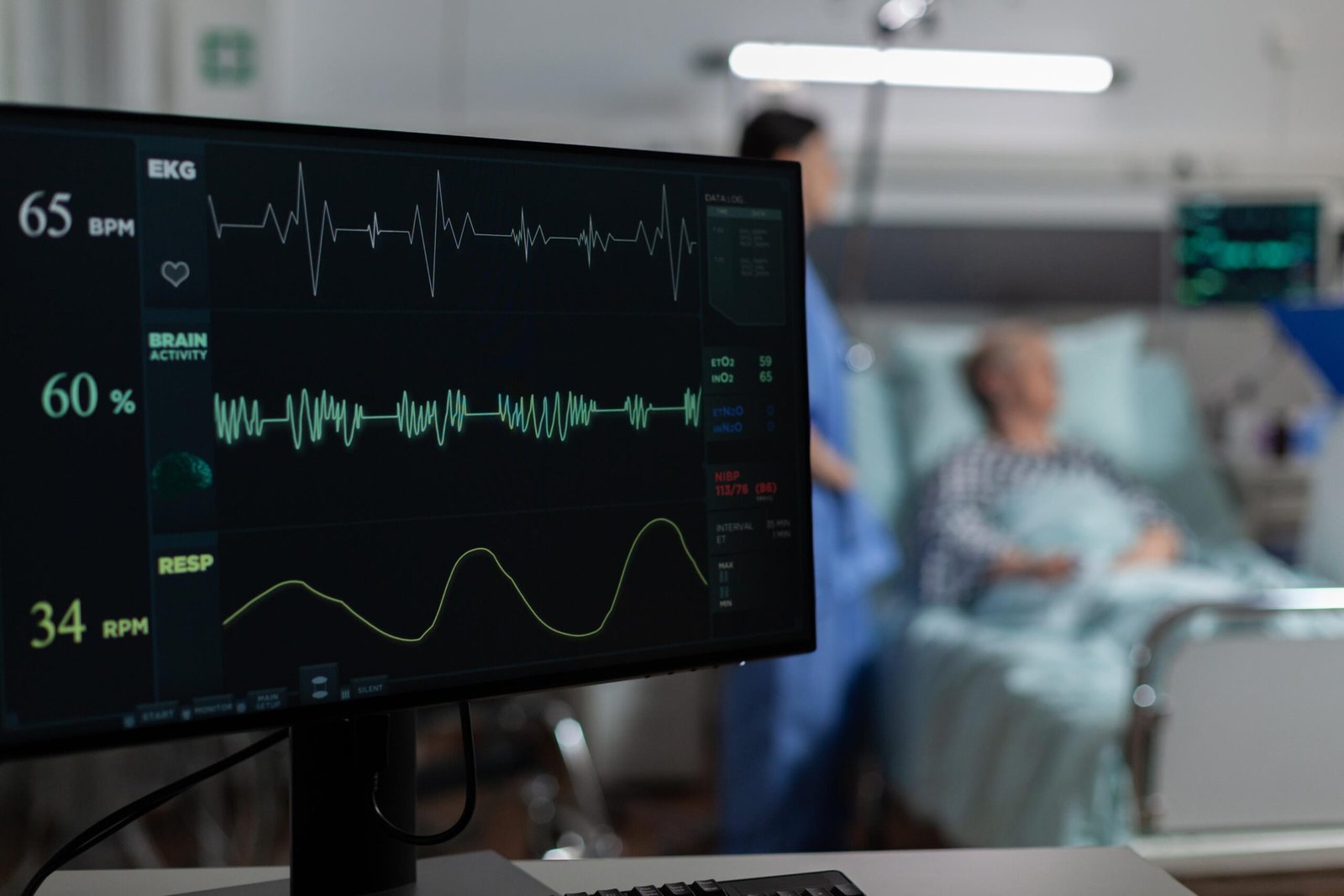
An ECG test also written as electrocardiogram or EKG is a non-invasive test that monitors the electrical activity of the heart and helps diagnose various heart conditions including arrhythmias, heart attacks, and heart failure. Every time the heart beats, electrical impulses travel through the heart muscle, causing it to contract and pump blood. The ECG test captures these electrical impulses from multiple electrodes attached to the chest, arms, and legs, and displays them as a series of waves on a graph.
The ECG electrocardiogram is completely safe. No electrical current enters the body it only reads the heart’s electrical signals that are already being generated with each heartbeat. The test provides a complete picture of the heart’s rate, rhythm, and conduction pattern and is routinely performed at SRM Global Hospitals as part of any cardiac evaluation.
The ECG test is also referred to as:
Electrocardiogram
ECG electrocardiogram
Resting ECG
12-lead ECG (the most common form)
Ambulatory ECG (when worn as a Holter monitor)
Why Is an ECG Test Done?
Doctors recommend an ECG test for individuals experiencing following symptoms like chest pain, dizziness, shortness of breath, or palpitations, as well as for those with risk factors such as high blood pressure, diabetes, or a family history of heart disease. The ECG test helps evaluate the heart’s rhythm and electrical activity, allowing doctors to identify potential heart disease or abnormalities in heart function which is crucial for early detection and treatment.
Experienced cardiologists at SRM Global Hospitals recommend getting an ECG test for the following clinical reasons:
Chest pain — to determine whether chest pain is cardiac in origin and whether signs of a heart attack are present
Shortness of breath or breathlessness — to assess whether abnormal heart rhythms or poor blood flow are contributing
Dizziness or fainting — to evaluate whether abnormal heart rhythms are causing these heart-related symptoms
Irregular heartbeats or palpitations — to identify the type and origin of abnormal heart rhythms
High blood pressure — to assess its effect on the heart’s electrical activity and detect heart enlargement
Family history of heart disease — particularly a family history of heart attacks or sudden cardiac events
Sedentary lifestyle with cardiac risk factors — early detection of blocked arteries or poor blood flow before symptoms develop
Heart failure monitoring — to track electrical changes in patients with existing heart conditions
Routine health checkups — especially for individuals above 40 years, or those with diabetes, high cholesterol, or overall cardiovascular health concerns
Pre-operative cardiac assessment — required before surgery to establish a baseline and detect any heart conditions
Heart medications monitoring — to assess how heart medications are affecting the heart’s electrical activity
When Should You Get an ECG Test Done Immediately?
Following Symptoms | Urgency |
|---|---|
Sudden severe chest pain or pressure | Emergency seek care immediately |
Chest pain with shortness of breath and sweating | Emergency possible heart attack |
Fainting or sudden loss of consciousness | Urgent same-day ECG test done |
Rapid irregular heartbeats lasting more than 30 minutes | Urgent get an ecg test today |
Dizziness with breathlessness at rest | Same-day ECG assessment recommended |
Persistent poor blood flow symptoms in hands or feet | Cardiologist referral with ECG test |
Types of ECG Tests
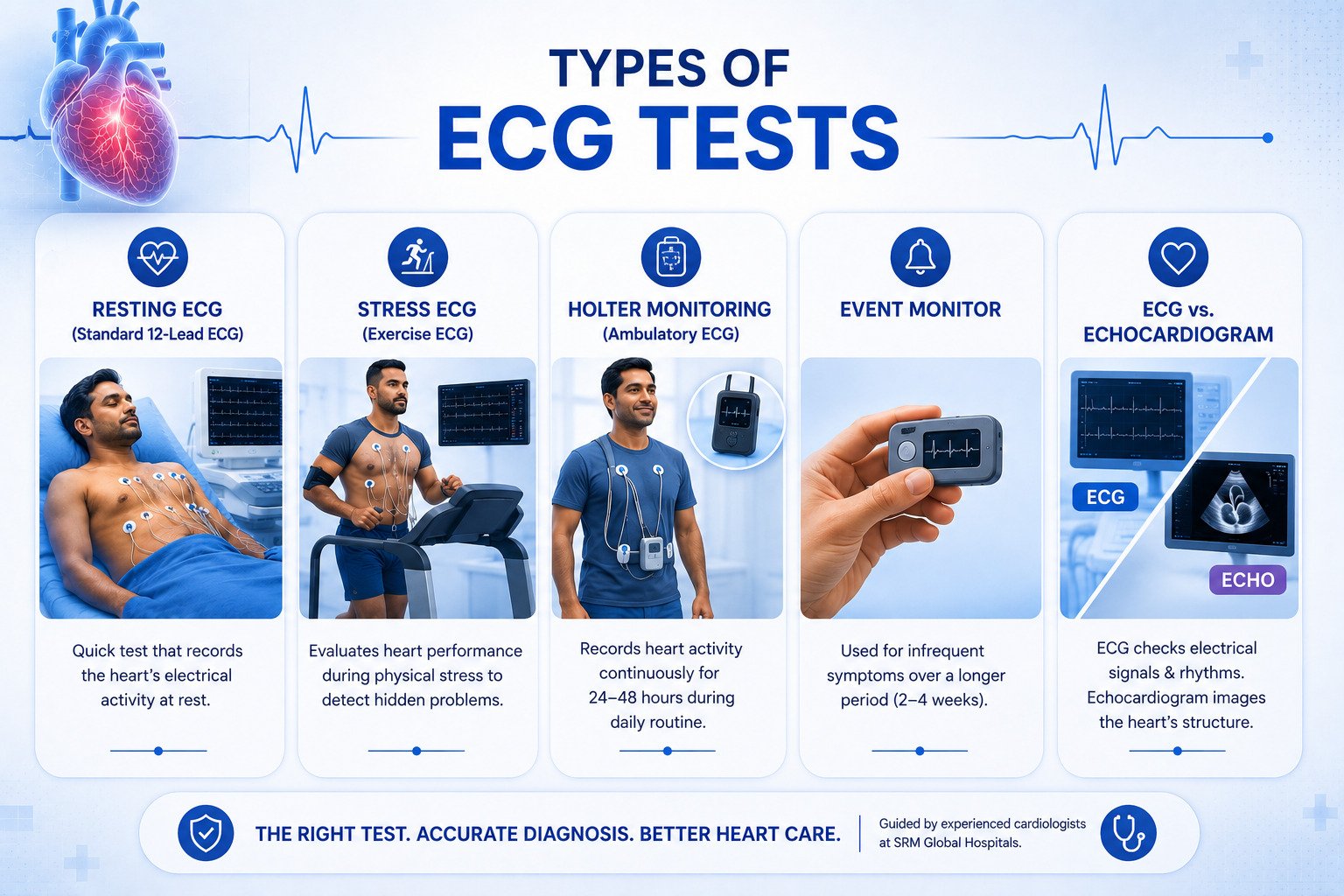
There are primarily three types of ECG tests commonly performed the standard 12-lead resting ECG, Holter monitoring, and stress ECG. Experienced cardiologists at SRM Global Hospitals select the most appropriate type based on the patient’s heart-related symptoms and medical history.
Resting ECG (Standard 12-Lead ECG)
A standard 12-lead ECG uses ten electrodes multiple electrodes attached to the chest, arms, and legs to record electrical signals from twelve different views, providing a complete picture of the heart’s electrical activity. This is the most widely performed ECG test done in clinical practice. The resting ECG is completed within five to ten minutes, requires no lab visit preparation, and delivers accurate results immediately. Experienced cardiologists at SRM Global Hospitals use the resting ECG as the foundation for evaluating all heart conditions.
Stress ECG (Exercise ECG or Treadmill Test)
A stress ECG test is conducted while the patient exercises on a treadmill or exercise bike, allowing doctors to assess how the heart performs under physical stress which can reveal blocked arteries, poor blood flow, and abnormal heart rhythms not seen in a resting ECG. Cardiologists at SRM Global Hospitals use the stress test to detect coronary artery disease, evaluate exercise-induced arrhythmias, and assess overall cardiovascular health in patients with a sedentary lifestyle or significant cardiac risk factors.
Holter Monitoring (Ambulatory ECG)
Holter monitoring is a type of ECG test that records the heart’s electrical activity continuously over 24 to 48 hours to detect intermittent arrhythmias and abnormal heart rhythms. The patient wears a portable ambulatory ECG device and goes about normal daily activities while the device records every heartbeat. This makes the Holter monitor ideal for capturing irregular heartbeats, dizziness episodes, or heart-related symptoms that do not occur during a standard resting ECG lab visit.
Event Monitor
An event monitor is used for patients with infrequent symptoms over a longer period typically two to four weeks. Unlike a Holter monitor, it records only when the patient activates it during a symptomatic episode such as dizziness or palpitations.
ECG vs. Echocardiogram
It is important not to confuse an ECG test with an echocardiogram. The ECG electrocardiogram records the heart’s electrical signals and heart rhythms, while an echocardiogram uses ultrasound to image the heart’s physical structure. Both provide complementary information, and experienced cardiologists at SRM Global Hospitals frequently order both tests together for a complete cardiac evaluation.
How Is an ECG Test Performed?
The ECG test procedure is straightforward, painless, and completed within ten minutes at SRM Global Hospitals. Trained technicians ensure accurate electrode placement and accurate results throughout the procedure.
Step-by-Step Procedure
Preparation: The patient lies on an examination table. No special preparation is needed no fasting, no injection, no sedation for a standard resting ECG.
Electrode placement: Trained technicians place ten small adhesive patches multiple electrodes attached to the chest, arms, and legs at precise anatomical locations to capture electrical signals from all twelve views.
Connection: The electrodes are connected to the ECG machine, which amplifies and records the electrical impulses from each lead.
Recording: The patient lies still and breathes normally while the machine records the heart’s electrical activity. Movement can interfere with accurate results, so stillness is essential.
Completion: Electrodes are removed and the ECG tracing is printed or stored digitally. The entire procedure takes five to ten minutes.
Interpretation: Experienced cardiologists at SRM Global Hospitals review the ECG test reports to assess heart rate, heart rhythms, heart beats pattern, and any waveform changes indicating heart conditions.
What to Expect During an ECG Test
The ECG test is completely painless patients feel nothing during the recording. Some patients notice mild skin sensitivity when the electrode patches are removed. There is no radiation, no contrast dye, and no needles involved. Patients can eat normally, take heart medications as prescribed, and attend a routine lab visit without any disruption to their day.
Understanding ECG Test Results
ECG test results are interpreted by experienced cardiologists based on the shape, height, and timing of the waveforms. Each component of the ECG electrocardiogram corresponds to a specific electrical event in the cardiac cycle.
The ECG Waveform: What Each Component Means
ECG Component | What It Represents |
|---|---|
P wave | Electrical activation of the upper chambers — triggers atrial contraction |
PR interval | Time for the electrical signal to travel from atria to ventricles |
QRS complex | Electrical activation of the ventricles — the main pumping contraction; abnormal heart rhythms show here |
ST segment | Period between ventricular activation and recovery — changes indicate heart attacks or poor blood flow |
T wave | Recovery of the ventricles after contraction |
QT interval | Total ventricular activation and recovery time — prolongation signals risk of dangerous arrhythmia |
What Normal ECG Test Results Look Like
A normal resting ECG shows regular heart rhythms, a heart rate between 60 and 100 beats per minute, consistent waveform shapes, and normal intervals. Experienced cardiologists at SRM Global Hospitals confirm normal ECG test results and correlate them with the patient’s overall heart health and following symptoms before closing the evaluation.
Common Abnormal ECG Test Results
Atrial fibrillation: Irregular, disorganised heart rhythms with no clear P waves the most common sustained arrhythmia
ST-segment elevation: A hallmark sign of an acute heart attack requiring emergency intervention
ST-segment depression: Indicates poor blood flow to the heart muscle, often revealed by a stress test
Left ventricular hypertrophy: Heart enlargement due to long-standing high blood pressure, seen as abnormally tall QRS complexes
Bundle branch block: A delay in the electrical conduction pathway, causing wide abnormal QRS complexes
Prolonged QT interval: Signals increased risk of dangerous ventricular arrhythmia and sudden cardiac events
Pathological Q waves: Evidence of previous heart attacks, even without current symptoms
Heart block: Delayed or failed electrical conduction between chambers, ranging from mild to complete
What Happens After Abnormal ECG Test Reports?
An abnormal ECG test result does not always confirm serious heart disease — many changes are benign or require only monitoring. However, experienced cardiologists at SRM Global Hospitals take all abnormal ECG test reports seriously and correlate them with symptoms, medical history, and other test findings.
Depending on the findings, the cardiologist may recommend:
A repeat resting ECG to confirm the result
A stress test to assess heart function under physical exertion
An ambulatory ECG or Holter monitor for prolonged heart rhythms assessment
An echocardiogram to evaluate heart structure alongside electrical activity
Cardiac biomarker blood tests if heart attacks are suspected
Coronary angiography if blocked arteries or severe poor blood flow is indicated.
ECG Test Price in India: What Does It Cost?
The ECG test price in India varies depending on the type of ECG test, the city, the type of facility, and whether the test is part of a health package. The price of an ECG test in India generally ranges from ₹200 to ₹900, depending on the diagnostic centre and location. Understanding what drives the ECG test cost helps patients find the best ECG test price without compromising on quality or accurate results.
ECG Test Price by Test Type
Type of ECG Test | Approximate ECG Test Price (India) |
|---|---|
Resting 12-Lead ECG | ₹150 – ₹500 |
Stress ECG (Treadmill Test) | ₹1,500 – ₹5,000 |
Holter Monitor (24-hour Ambulatory ECG) | ₹1,500 – ₹4,000 |
Holter Monitor (48-hour) | ₹2,500 – ₹5,000 |
At-home ECG test service | ₹799 – ₹1,200 (includes technician visit) |
ECG as part of cardiac health package | ₹500 – ₹3,000 (package dependent) |
Note: These are indicative ranges. Contact SRM Global Hospitals directly for current ECG test price and health package details.
ECG Test Price by Facility Type
The type of facility significantly affects the ECG test cost in India:
Government hospitals: Offer the lowest ECG test price often free for eligible patients or subsidised under specific government health schemes
Local diagnostic labs and independent clinics: Typically price ECG tests between ₹200 and ₹400, making them the most accessible option for a routine lab visit
Private multi-specialty hospitals: Typically charge ₹500 to ₹900 for a basic ECG due to higher operational overheads but include experienced cardiologists for interpretation and integration with other cardiac services
At-home ECG testing services: Convenient but come with a premium for the technician’s visit, raising the total ECG test cost to around ₹799 to ₹1,200 or more
ECG Test Price Across Major Cities in India
Pricing for ECG tests is higher in metropolitan areas (Tier 1) compared to smaller cities (Tier 2 and 3) due to real estate costs and operational expenses.
Location | Approximate Standard ECG Test Price |
|---|---|
Major cities (Mumbai, Chennai, Bengaluru, Hyderabad) | ₹300 – ₹800 |
Tier 2 cities | ₹200 – ₹500 |
Tier 3 cities and smaller towns | ₹150 – ₹300 |
Patients in major cities looking for the best ECG test price should compare packages offered by multi-specialty hospitals like SRM Global Hospitals, where the ECG test cost includes cardiologist interpretation, ECG test reports, and integration with comprehensive cardiac diagnostic services.
Factors That Affect the ECG Test Price
Several key factors influence how much an ECG test costs at any given diagnostic centre:
Type of ECG test: A resting ECG is the most affordable. Advanced ECG tests such as stress ECG or Holter monitoring typically have higher costs due to equipment, monitoring time, and specialist review.
Location: ECG test price in major cities is higher than in Tier 2 and Tier 3 locations due to real estate and operational costs.
Facility type: Government hospitals, local labs, private diagnostic centres, and multi-specialty hospitals each have different pricing structures.
Cardiologist interpretation: ECG test cost is higher when experienced cardiologists provide immediate interpretation alongside the ECG test reports but this adds significant clinical value.
Health package inclusion: When the ECG test is included in a routine health checkup or cardiac screening package, the effective test price per investigation is significantly lower.
Health insurance: ECG tests may be covered by health insurance if deemed medically necessary and prescribed by a doctor. Most policies cover the ECG test cost when it is clinically indicated.
At-home convenience: At-home ECG test services add a convenience fee for the technician’s visit, increasing the total ECG test price compared to a standard lab visit.
Is the ECG Test Price Worth It?
The ECG test is one of the most cost-effective cardiac investigations available anywhere. For an affordable test price, patients receive a complete picture of their heart’s electrical activity, allowing experienced cardiologists to detect heart attacks, abnormal heart rhythms, heart failure, poor blood flow, and heart enlargement often within minutes. Early detection through a timely ECG test done at a diagnostic centre can prevent life-threatening cardiac events and significantly reduce long-term treatment costs. The ECG test price, regardless of facility type, represents exceptional value for overall heart health.
Get Your ECG Test Done at SRM Global Hospitals — Book an Appointment
SRM Global Hospitals in Chennai provides comprehensive ECG testing and cardiac diagnostic services with experienced cardiologists, trained technicians, and advanced cardiac monitoring technology. Book an ECG test today and get accurate results with same-day cardiologist review.
Resting ECG test with immediate ECG test reports and same-day experienced cardiologist interpretation
Stress ECG (treadmill test) conducted under continuous cardiac monitoring for complete cardiovascular health assessment
24-hour and 48-hour ambulatory ECG and Holter monitoring for detection of intermittent arrhythmias and irregular heartbeats
Integrated cardiac diagnostics — ECG test results reviewed alongside echocardiogram, blood tests, and coronary angiography as required
Emergency ECG availability for patients presenting with acute chest pain, shortness of breath, or suspected heart attacks
Cardiac health packages including ECG test at the best ECG test price ideal for routine health checkups and pre-operative assessment
Experienced cardiologists ensuring every ECG test report is reviewed in full clinical context for accurate results
Transparent ECG test cost with insurance-friendly billing and flexible health package options
FAQs on ECG Test
1. What Is an ECG Test and What Does It Detect?
An ECG test or electrocardiogram is a non-invasive test that monitors the electrical activity of the heart to help diagnose heart conditions such as arrhythmias, heart attacks, heart failure, and poor blood flow. Experienced cardiologists at SRM Global Hospitals use ECG test results to evaluate heart rhythms, detect blocked arteries, identify heart enlargement, and guide treatment decisions for overall cardiovascular health.
2. What Is the ECG Test Price in India?
The ECG test price in India generally ranges from ₹200 to ₹900 depending on the diagnostic centre and location. Local labs and independent clinics typically price ECG tests between ₹200 and ₹400. Private multi-specialty hospitals typically charge ₹500 to ₹900 for a basic ECG. Advanced ECG tests such as stress ECG or Holter monitoring typically cost between ₹1,500 and ₹5,000. At-home ECG services cost around ₹799 to ₹1,200 including the technician’s visit. Contact SRM Global Hospitals for the best ECG test price with cardiologist interpretation included.
3. What Are the Three Main Types of ECG Tests?
There are primarily three types of ECG tests commonly performed the standard resting 12-lead ECG, Holter monitoring (ambulatory ECG), and the stress ECG test. A standard 12-lead ECG uses ten electrodes attached to the chest, arms, and legs to record electrical signals from twelve different views. Holter monitoring records heart rhythms continuously over 24 to 48 hours. A stress ECG test is conducted while the patient exercises to assess how the heart performs under physical exertion.
4. Is the ECG Test Price Covered by Health Insurance?
ECG tests may be covered by health insurance if deemed medically necessary and prescribed by a doctor. Most health insurance policies in India cover the ECG test cost when it is clinically indicated. Coverage for advanced ECG tests such as stress ECG and Holter monitoring may vary by policy. Patients at SRM Global Hospitals are advised to check with their insurer and the hospital billing team for cashless facility availability and specific coverage details.
5. Do I Need to Prepare Before Getting an ECG Test Done?
No special preparation is needed for a standard resting ECG lab visit. Patients can eat normally, take heart medications as prescribed, and attend the appointment without fasting. For a stress ECG test, patients are advised to avoid heavy meals for two to three hours before the test, avoid caffeine, and wear comfortable clothing and footwear suitable for exercise.
6. Can an ECG Test Detect Heart Attacks?
Yes. The ECG test is one of the primary diagnostic tools used to confirm heart attacks. Experienced cardiologists at SRM Global Hospitals identify characteristic changes in the ST segment particularly ST-segment elevation that are hallmark signs of an active heart attack, enabling immediate emergency intervention. ECG test results showing pathological Q waves can also reveal previous heart attacks even without current symptoms.
7. What Does a Normal ECG Test Result Mean?
A normal ECG test result shows regular heart rhythms, heart beats between 60 and 100 per minute, consistent waveform shapes, and normal electrical intervals. This means the heart’s electrical conduction system is functioning correctly at the time of the test. A normal resting ECG does not completely rule out intermittent arrhythmias if heart-related symptoms persist, experienced cardiologists at SRM Global Hospitals may recommend a stress test or ambulatory ECG for further evaluation.
8. Where Can I Get an ECG Test Done in Chennai?
You can get an ECG test done at SRM Global Hospitals in Chennai, with experienced cardiologists providing immediate interpretation, accurate ECG test reports, and integrated cardiac diagnostic services. SRM Global Hospitals offers the resting ECG, stress ECG, and ambulatory ECG Holter monitoring all at transparent ECG test pricing with health insurance billing support. Book an ECG test today by contacting the diagnostics team directly.
9. What Is the Difference Between a Resting ECG and an Ambulatory ECG?
A resting ECG is a standard 12-lead ECG test done in a clinic or hospital over five to ten minutes, capturing a snapshot of the heart’s electrical activity at rest. An ambulatory ECG such as a Holter monitor records the heart’s electrical activity continuously over 24 to 48 hours while the patient goes about daily activities. The ambulatory ECG is used to detect intermittent abnormal heart rhythms or irregular heartbeats that may not appear during a brief resting ECG lab visit.
