


Speech-language Therapy for Autism: Connect, Express, and Understand the World Around You
Communication affects how a person expresses needs, understands instructions, and connects with others in daily life. Especially for children with autism, who often experience delays in speech and language development, face day-to-day challenges in communication. Structured speech-language therapy addresses these areas in a coordinated and goal-based manner. It helps to manage autism spectrum disorder by building practical communication skills that support learning, behaviour, and relationships, with structured programs available at SRM Global Hospitals, Chennai.
Autism Spectrum Disorder: Communication Issues
Autism spectrum disorder influences both verbal communication and nonverbal communication, such as:
- Delayed speech development
- Limited vocabulary growth
- Difficulty understanding instructions
- Reduced pretend play skills
- Trouble interpreting figurative language
- Difficulty recognising social cues
- Some use limited spoken words, while others rely on single words or remain nonverbal.
- Difficulty with eye contact, facial expressions, gestures, and tone of voice can affect social interaction.
Without structured support, these communication barriers can affect classroom participation, peer relationships, and everyday routines. So, speech-language therapy for autism mainly focuses on strengthening these foundational communication skills step by step, supported by speech-language pathologists and developmental specialists at SRM Global Hospitals.
Early Intervention in Speech Development
Early intervention plays a major role in speech development. When speech therapy begins soon after an autism diagnosis, children often show stronger progress in language comprehension and spoken language, through the therapy goals such as:
- Encouraging first words and word combinations
- Building functional vocabulary
- Improving listening and receptive language skills
- Supporting turn-taking and shared attention
As language skills are still forming in young children, consistent early language therapy for autism can support smoother school transitions and stronger self-expression in daily routines under the guidance of speech-language therapists at SRM Global Hospitals.
Speech-language Assessment
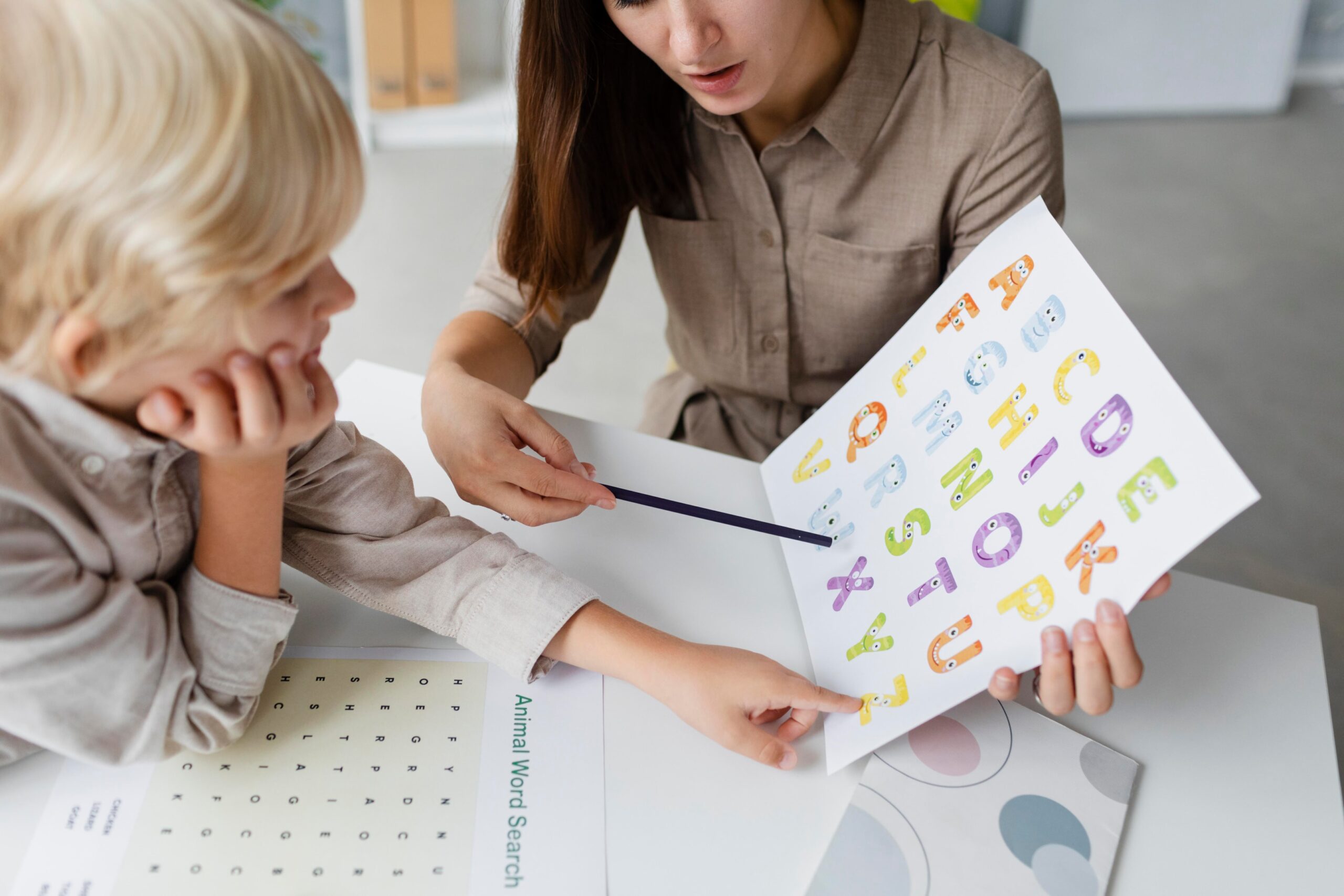
Speech-language pathologists begin with a detailed communication assessment, which identifies strengths, developmental delays, and areas needing targeted support, such as:
- Clarity of speech sounds (articulation)
- Expressive language skills
- Receptive language abilities
- Ability to follow instructions
- Social communication during interaction
- Nonverbal communication skills
This clear evaluation supports measurable goals and structured therapy sessions conducted by trained clinicians and multidisciplinary specialists at SRM Global Hospitals.
Speech Therapy

Speech therapy sessions are personalised and goal-oriented session which targets specific communication challenges while supporting overall language development through:
- Articulation practice to improve speech clarity
- Expanding single words into short phrases
- Vocabulary building through guided repetition
- Sentence formation exercises
- Activities that strengthen language comprehension
Speech therapy in different environments helps children generalise communication abilities into everyday life, with coordinated support from speech therapists, pediatric neurologists, and child development specialists at SRM Global Hospitals.
Language Therapy
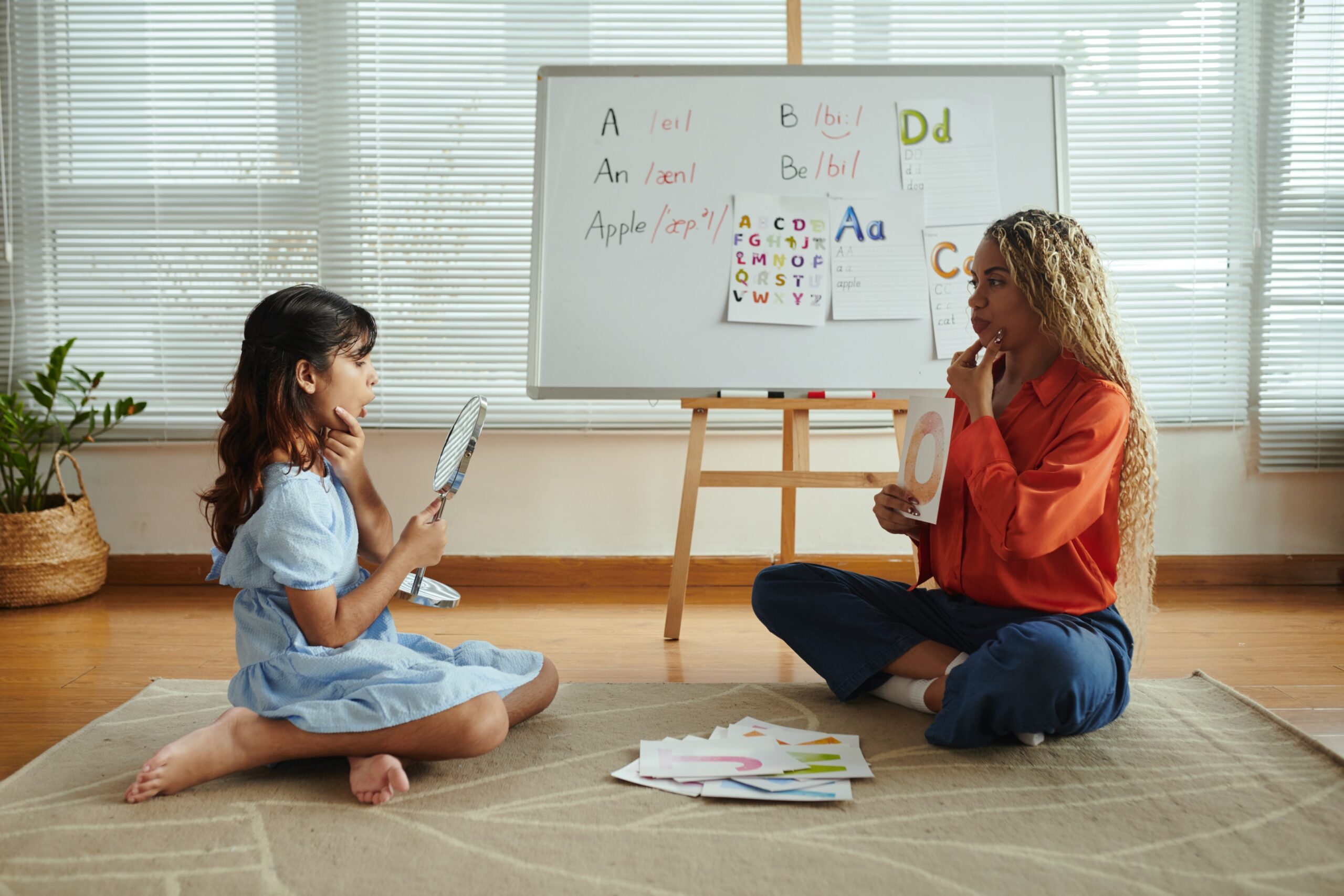
Language therapy for autism focuses on both expressive language and receptive language.
- Expressive language supports spoken words, sentence formation, and conversation skills.
- Receptive language strengthens understanding of instructions, questions, and social information.
In language therapy, the activities include:
- Reading short, structured stories to build comprehension
- Singing rhymes to improve rhythm and speech clarity
- Interactive games that promote turn-taking
- Structured pretend play for conversation practice
- Social stories that explain expected behaviours
Consistent practice improves communication abilities and reduces frustration linked to misunderstanding.
Augmentative and Alternative Communication (AAC)

Augmentative and Alternative Communication (AAC) supports children who are nonverbal or have limited spoken language. It enhances an individual’s communication without preventing speech development. Low-tech AAC tools include:
- Communication boards
- Picture cards
- Gestures
- Sign language
- Speech-generating devices
- Tablet-based AAC systems
In AAC, one widely used method is the Picture Exchange Communication System, which teaches children to exchange pictures to express needs and preferences. Speech language pathologists guide families in selecting AAC methods that match the child’s communication abilities and language comprehension level. It improves participation in social interaction and classroom learning while supporting overall communication growth.
Social Communication Therapy
Many children with autism face challenges interpreting facial expressions, tone of voice, and body language. So, social communication therapy helps children engage more confidently with peers and adults, with the focus on:
- Maintaining appropriate eye contact
- Recognising emotions in facial expressions
- Understanding social cues
- Practising conversational turn-taking
- Initiating and sustaining conversations
Role playing and structured peer interaction provide safe opportunities to practice social communication skills, leading to stronger participation in group settings and public environments.
Family-centered Therapy
Family involvement strengthens progress in speech-language therapy for autism. A family-centred approach ensures communication practice continues beyond therapy sessions. So the speech and language therapists guide caregivers in:
- Expanding a child’s new word into phrases
- Encouraging communication during play
- Using favourite toys or snacks to motivate speech
- Applying positive reinforcement
- Supporting nonverbal communication with AAC tools
Short, consistent practice during daily routines such as meals and playtime reinforces therapy goals. Access to community autism services and parent support groups can provide additional guidance.
Speech-language therapy across different settings
Speech-language therapy for children with autism can be delivered in hospitals, clinics, schools, or at home.
- Clinic-based sessions provide structured evaluation and specialised tools.
- School-based speech therapy integrates communication goals with academic learning.
- Home-based therapy supports real-life communication during routines.
Emerging digital tools, including virtual practice environments, create additional opportunities to strengthen social communication skills. These virtual therapy sessions through tele-health platforms improve access for families in remote areas, including coordinated care support available through SRM Global Hospitals.
Schedule Your Consultation at SRM Global Hospitals
SRM Global Hospitals in Chennai offers structured speech-language therapy programs that are designed to strengthen clarity, comprehension, expression, and social interaction skills across diverse communication needs.
- Detailed communication assessments to understand speech clarity, language processing, and interaction patterns.
- Goal-based therapy plans personalised to individual communication profiles.
- Integrated support services, including speech therapy, language intervention, AAC guidance, social communication and family training.
- Collaborative multidisciplinary care, ensuring coordinated support from experienced medical and rehabilitation professionals.
FAQs on Speech-language Therapy for Autism
1. Can Speech Therapy Help With Autism in Young Children?
Yes. Early intervention supports language development, social skills, and effective communication skills. The young children with autism often show better long-term progress when therapy begins early and includes short, engaging speech therapy exercises in daily routines.
2. My Child is Nonverbal. How Will They Communicate Without Speaking?
For nonverbal autistic children, therapists use nonverbal communication methods like communication boards, gestures, and AAC devices. Tools such as the Picture Exchange Communication System (PECS) help them express needs and reduce frustration.
3. Why Does My Child Struggle With Eye Contact and Social Behaviours?
Many autistic children find it hard to read facial expressions and social cues. Social communication therapy teaches eye contact, turn-taking, and understanding emotions through role-play, interactive games, and structured sensory activities.
4. What happens in an on-site therapy session for Autism Speech?
On-site therapy sessions include assessment by a speech-language therapist, personalised therapy exercises, visual supports, and activities using favourite toys to create opportunities for communication.
5. How Can Families Support Autism Speech Therapy at Home?
Collaboration with families is essential, so they are guided to practice communication during daily routines, use communication boards, and reinforce social skills.
6. Why is Personalised Treatment Planning Important for Autism?
Autism has unique speech-related challenges and strengths. So, speech-language therapists use detailed assessment tools to design personalised plans, combining social communication therapy, sensory activities, AAC, and visual supports for better language development and social behaviours.
