


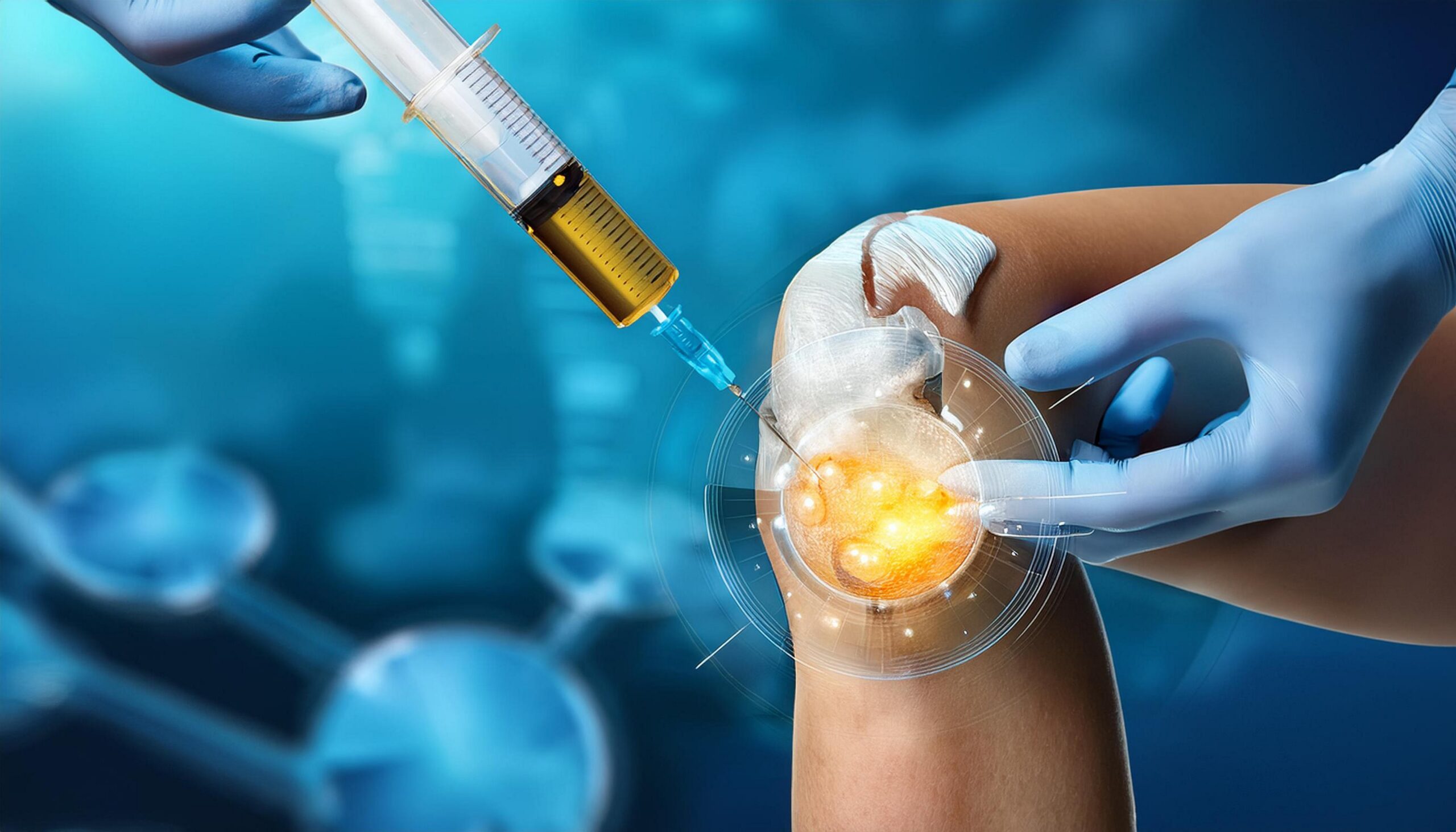
PRP Injection Knee Therapy: An Effective Non-surgical Way to Manage Knee Pain
Knee pain can interfere with basic daily activities, as walking becomes uncomfortable, climbing stairs feels difficult and sitting for long periods leads to stiffness. Over time, joint health declines and mobility reduces. For patients seeking a non-surgical and effective treatment option, PRP (Platelet-rich Plasma) injection knee therapy is currently gaining attention, in which the components of your own blood are used to reduce pain, decrease inflammation, and promote tissue repair inside the affected joint. This treatment is performed under the supervision of experienced orthopaedic specialists at SRM Global Hospitals, Chennai.
What is PRP Injection Knee Treatment?
PRP injection knee treatment is a regenerative procedure suggested in SRM Global Hospitals that involves injecting platelet-rich plasma directly into the affected knee joint. It is generally performed as an outpatient or day-care procedure (typically takes just 1-2 hours), in which the steps involved are:
-
Blood collection: A small sample of blood is drawn from the patient’s arm, similar to a routine blood test, to prepare platelet-rich plasma for the procedure.
-
Centrifugation: The collected blood is placed in a centrifuge machine, which spins at high speed to separate red blood cells, white blood cells, and platelet-rich plasma.
-
Extraction of PRP: The concentrated platelet-rich plasma layer is carefully isolated from the other blood cells for therapeutic use. These concentrated platelets contain growth factors (proteins).
-
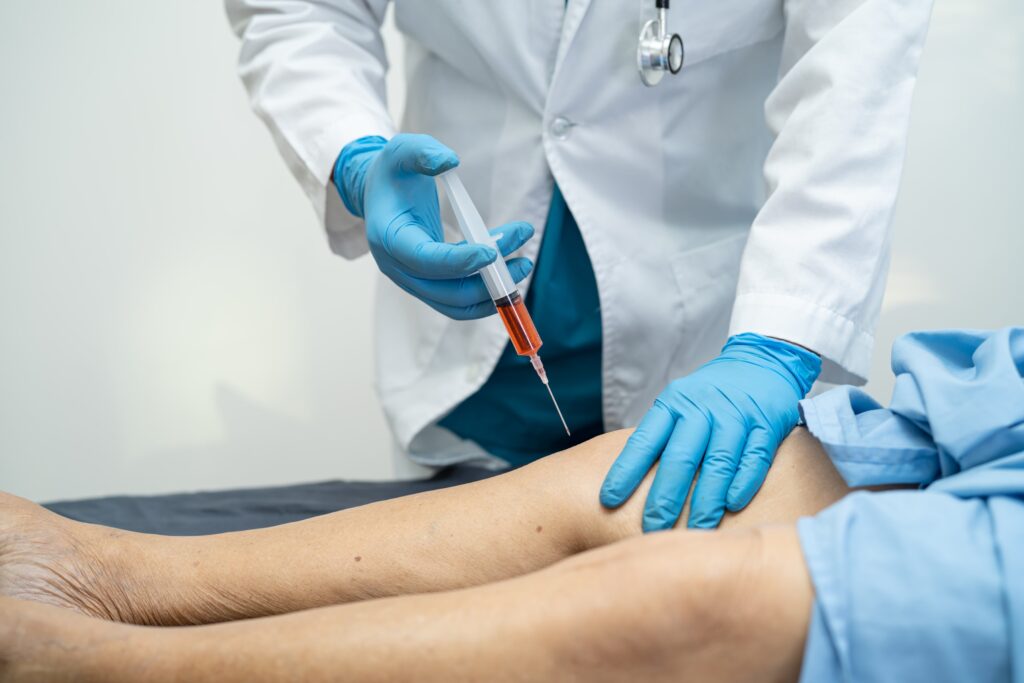
Injection into the knee: The prepared PRP is injected into the affected knee joint, often under ultrasound guidance, to support the healing process.
How PRP Works in the Knee Joint?
How PRP Works in the Knee Joint?
When platelet-rich plasma is injected into the knee joint, it activates the body’s natural healing process, which helps to
-
Decrease inflammation
-
Inhibit cartilage-degrading enzymes in knee arthritis.
-
Promote tissue repair
-
Aid in healing soft tissue injuries
-
Improve joint health
-
Alleviate pain and reduce pain signals.
Studies suggest that PRP treatment could slow the progression of knee arthritis in early to moderate stages. Many patients report improved range of motion and easier walking or stair climbing after treatment, especially when managed under orthopaedic and physiotherapy guidance at SRM Global Hospitals.
Conditions Treated With PRP Injections for the Knee
PRP therapy is recommended in specific knee conditions where reducing inflammation and promoting tissue repair can improve joint function, as evaluated by orthopaedic specialists and rehabilitation experts at SRM Global Hospitals, such as:
Knee Osteoarthritis
Knee osteoarthritis causes cartilage wear, inflammation, stiffness, and chronic pain, for which PRP injections are widely used in orthopaedic practice. A 2021 study reported approximately 60% success in moderate knee osteoarthritis cases, as it:
-
Reduce inflammatory signals
-
Improve mobility
-
Delay knee replacement surgery in selected patients
Ligament and Soft Tissue Injuries
Chronic Knee Pain
What Happens After PRP Injection in the Knee?
What Happens After PRP Injection in the Knee?
Most individuals begin noticing improvement in knee pain and mobility between two and six weeks after the injection. Maximum benefit is typically felt between three and six months as the healing process continues. In this phase, patients are generally advised to:
-
Avoid strenuous activity for a short period
-
Avoid anti-inflammatory medications (NSAIDs) for 1–2 weeks to support platelet function
-
Follow physiotherapy guidance
How Many PRP Injections Are Needed?
Most patients require 1 to 3 sessions, depending on:
-
Severity of knee pain
-
Extent of tissue damage
Multiple injections, typically 2 to 3 spaced a few weeks apart, are often recommended for better long-term management in moderate cases.
Regain Knee Comfort with PRP Therapy -Book Your Appointment
SRM Global Hospitals in Chennai offers structured, patient-focused PRP injection knee therapy designed to reduce pain, improve joint function, and support long-term knee health without surgery.
-
Dedicated orthopaedic care with personalised PRP treatment plans based on the severity of knee arthritis or soft tissue injury
-
Comprehensive clinical evaluation, including physical examination and imaging assessment, before recommending PRP therapy
-
Evidence-based regenerative approach aimed at decreasing inflammation and promoting tissue repair
-
Ultrasound-guided injection techniques are performed by experienced orthopaedic specialists for precision and safety.
-
Integrated rehabilitation support with physiotherapy guidance to enhance recovery and mobility
-
Modern day-care facilities with sterile protocols to ensure a safe and comfortable treatment experience
FAQs on PRP Injection Knee
1. How Do Platelet-rich Plasma PRP Injections for Knee Joint Pain Actually Work?
Platelet-rich plasma PRP injections use a small blood sample taken from your arm. The PRP procedure concentrates platelets that release growth factors to aid healing, reduce joint pain, and decrease inflammation in knee arthritis.
